City in the Cloud – Data on the Ground

About the exhibition

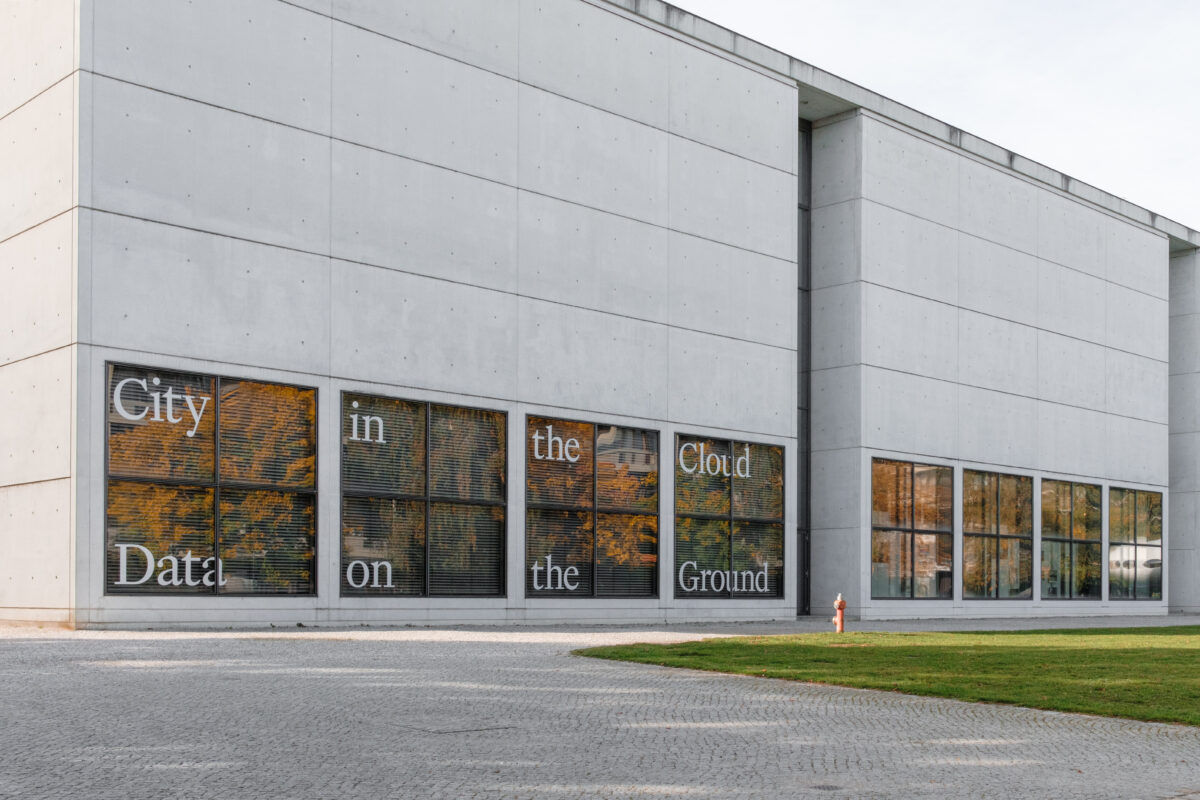
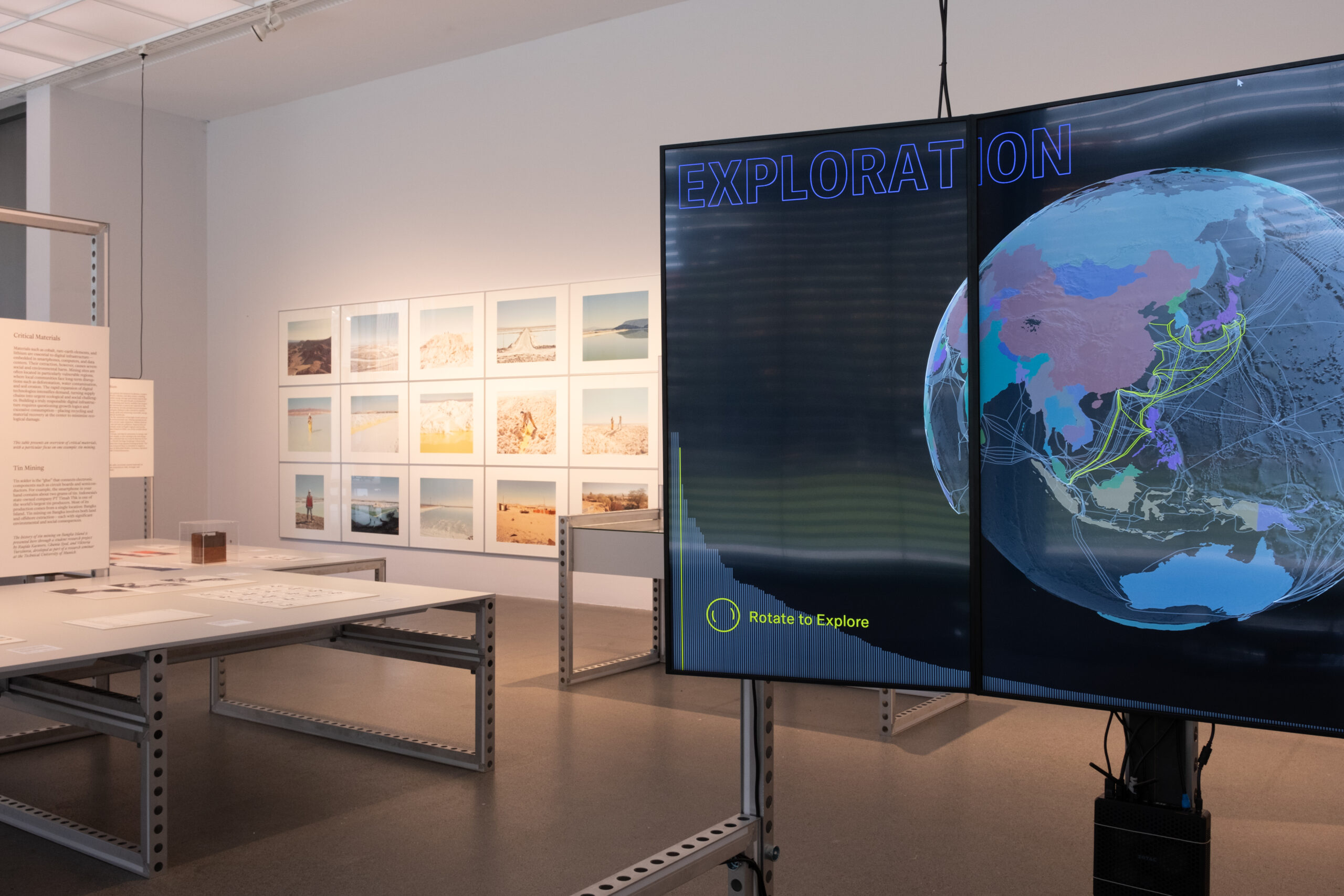
The digital cloud is everywhere. Yet to us, it is visible only through the myriad devices and screens that populate our lives: phones, laptops, smart home appliances, car interfaces, and countless displays in urban environments. For the exhibition “City in the Cloud – Data on the Ground”, shown at Architekturmuseum der TUM, Pinakothek der Moderne and curated by Damjan Kokalevski, we produced an array of interactive exhibits to expose the physical realities of the vast and rapidly expanding global data infrastructure: data centers in cities and remote regions, undersea cables, and raw materials. The exhibition is currently on display and still open until March 8th 2026.
Data shapes how we live, communicate, and govern. While we enjoy near-instant access to global information, we are increasingly reduced to mere data sources ourselves. Despite its critical role in our economic and societal systems, data infrastructure is rarely examined from a design or political perspective.

Beneath the surface lie both the software and algorithms that control data flows, and the physical infrastructure — microchips, batteries, land and undersea cables, data centers, and server farms. Keeping this system operational demands enormous energy, labor, and natural resources, from rare earth extraction to water for cooling. As the data economy grows, so too does its environmental footprint; securing an equitable digital future has therefore become an ecological and political challenge.

Architectural research can reveal these hidden material and political entanglements. That is our goal: to bring transparency to the cloud, from its historical foundations to future possibilities, and to argue for integrating the design and planning of data infrastructure more closely into societal and political awareness. This exhibition critically explores the physical spaces where the cloud is made and where data is produced, stored, and maintained. It raises urgent questions about how to balance rising demand for data with ecological sustainability and social equity.
Exhibition Team

Damjan Kokalevski – Curation
CP.WH – Exhibition Design
Wiegand von Hartmann – Graphic Design
3e8 – Interactive Exhibits

Production Team

Felix Betzenbichler – Software Development, Documentation, Executive Production
Thomas Geissl – Software Development, Backend
Rosa Havel – Production Assistance, Documentation
Christoph Ignaz Kirmaier – Production Lead, Software Development
Ilina Kokaleska – Art Direction, Industrial Design
Johannes Lemke – Software Development, Motion Design
Bessie Normand – Graphic Design
Philipp Parteder – Software Development, Motion Design
Jakob Schauer – Sound Design

Photos by

Felix Betzenbichler
Jan Gutjahr
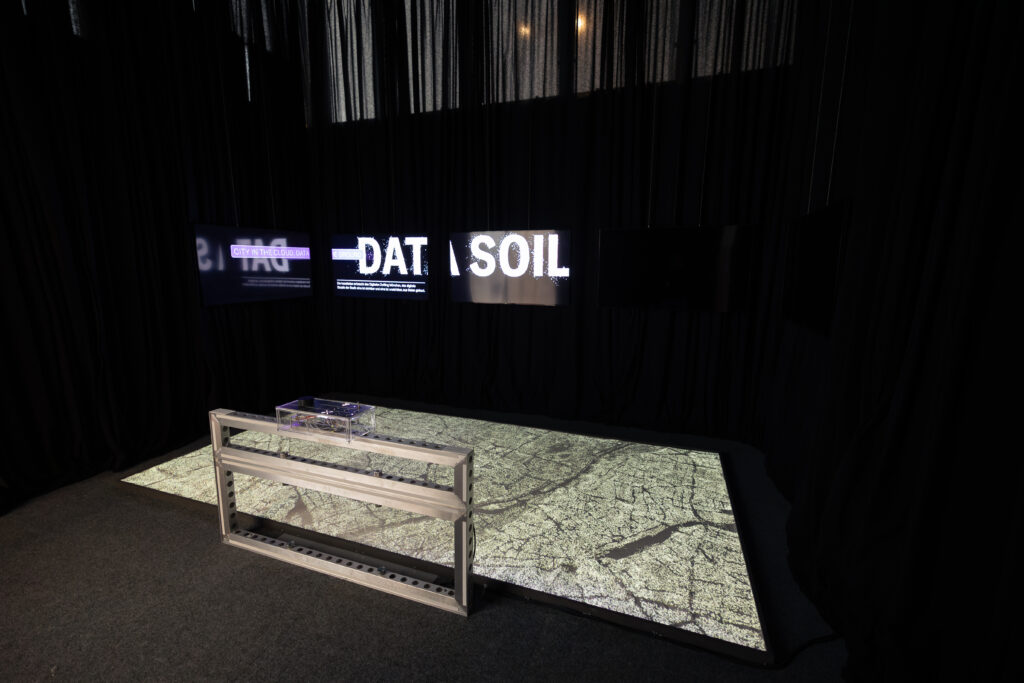
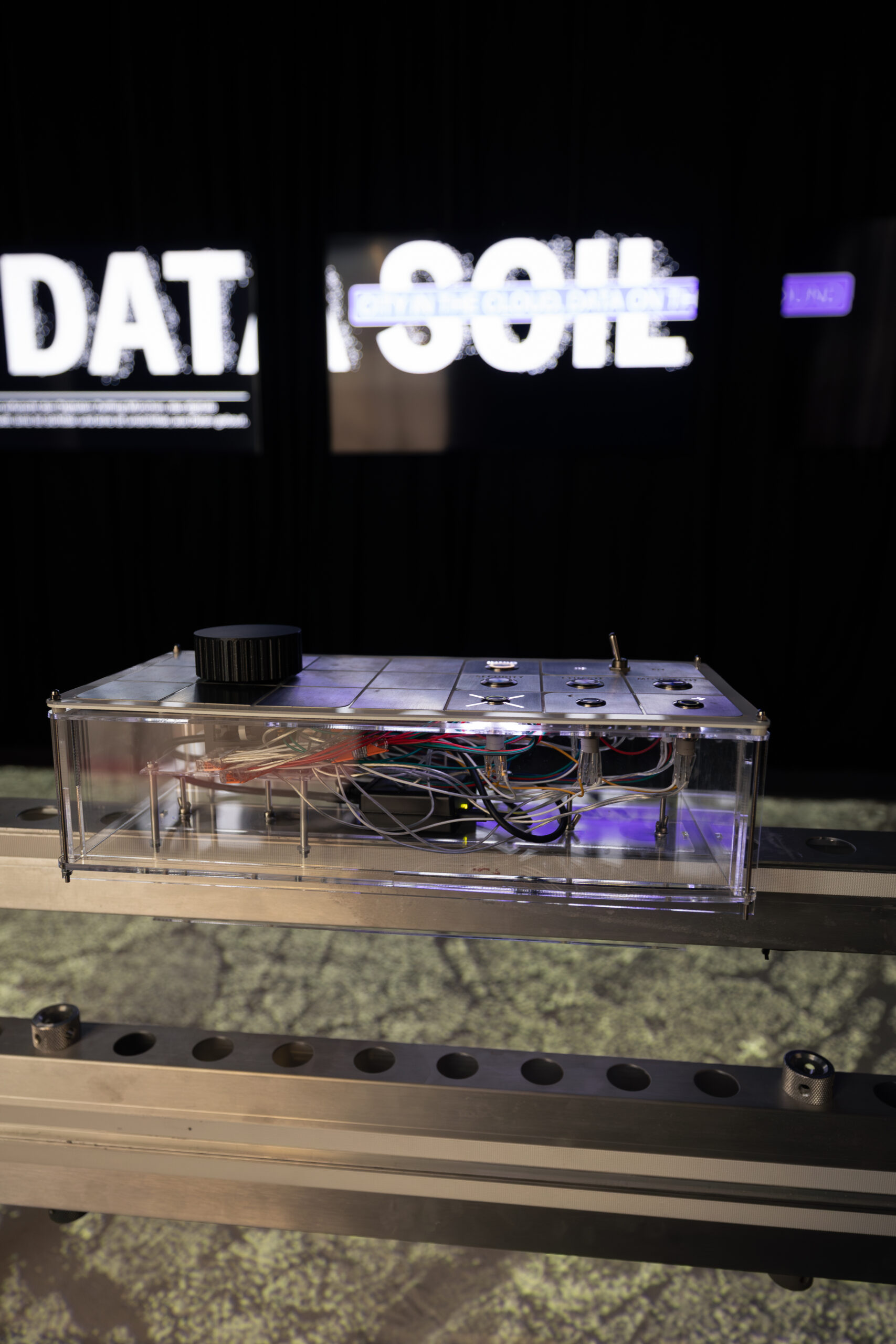
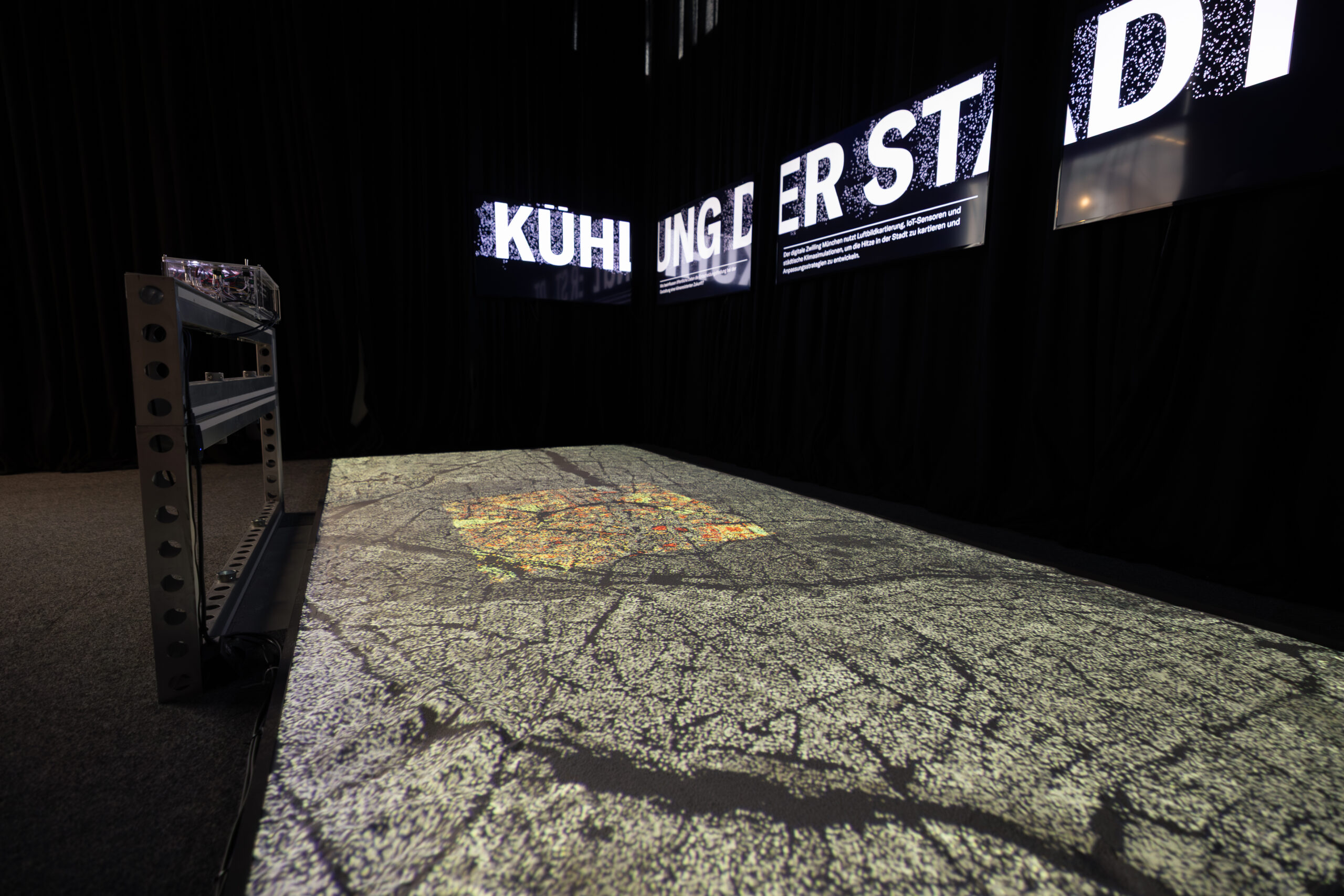
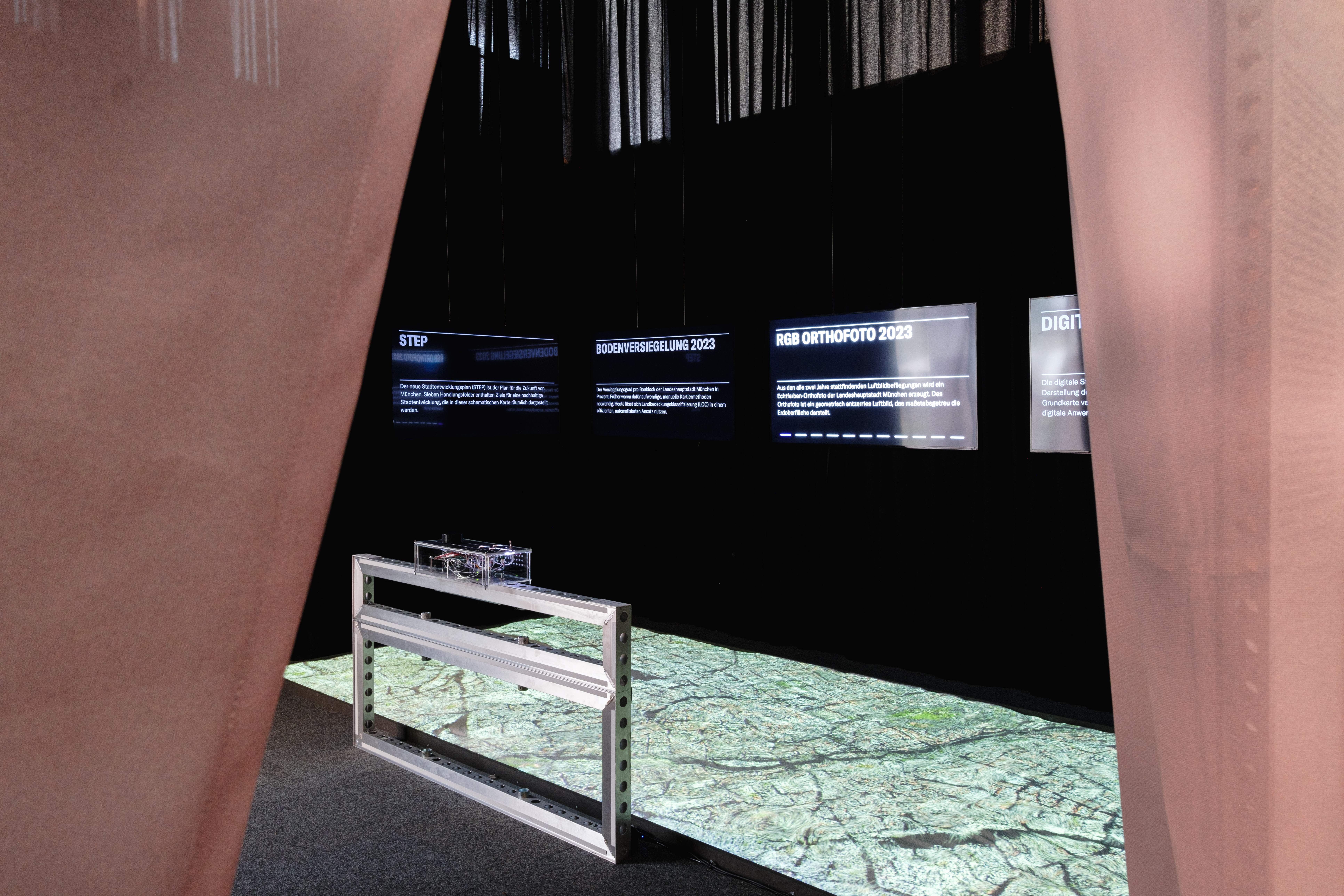
Data Soil

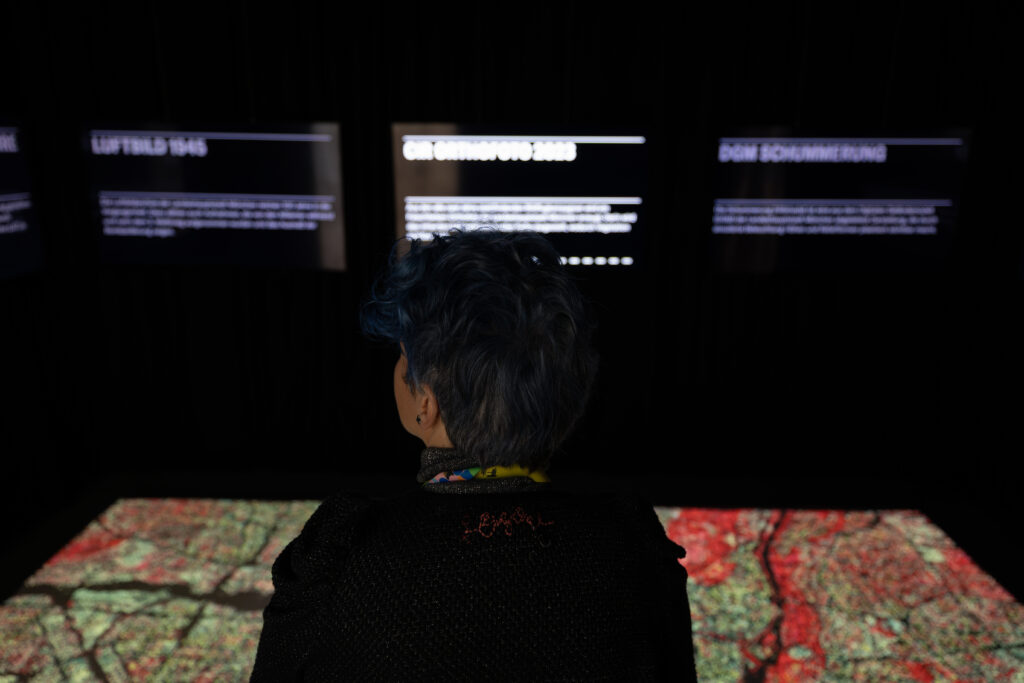
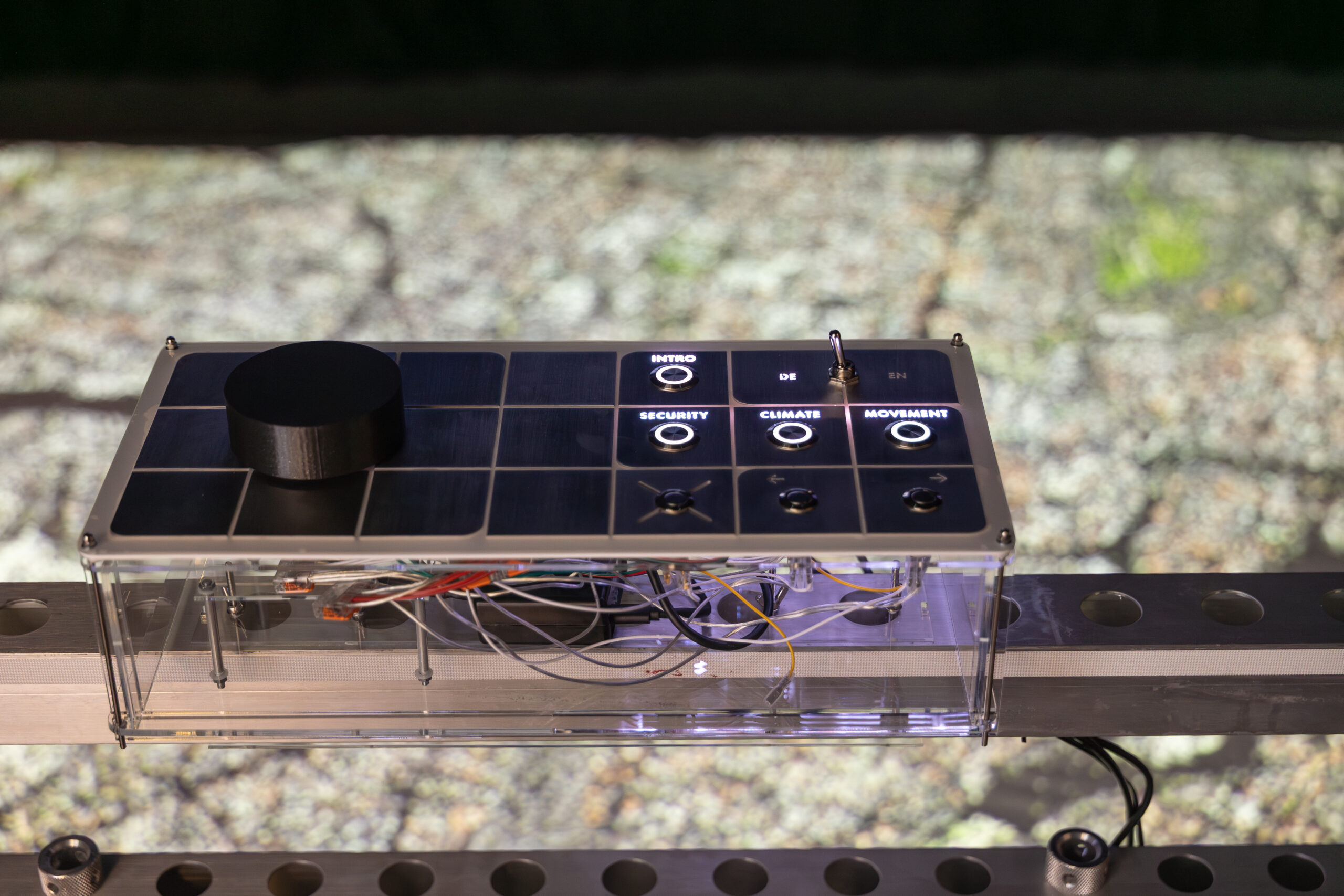
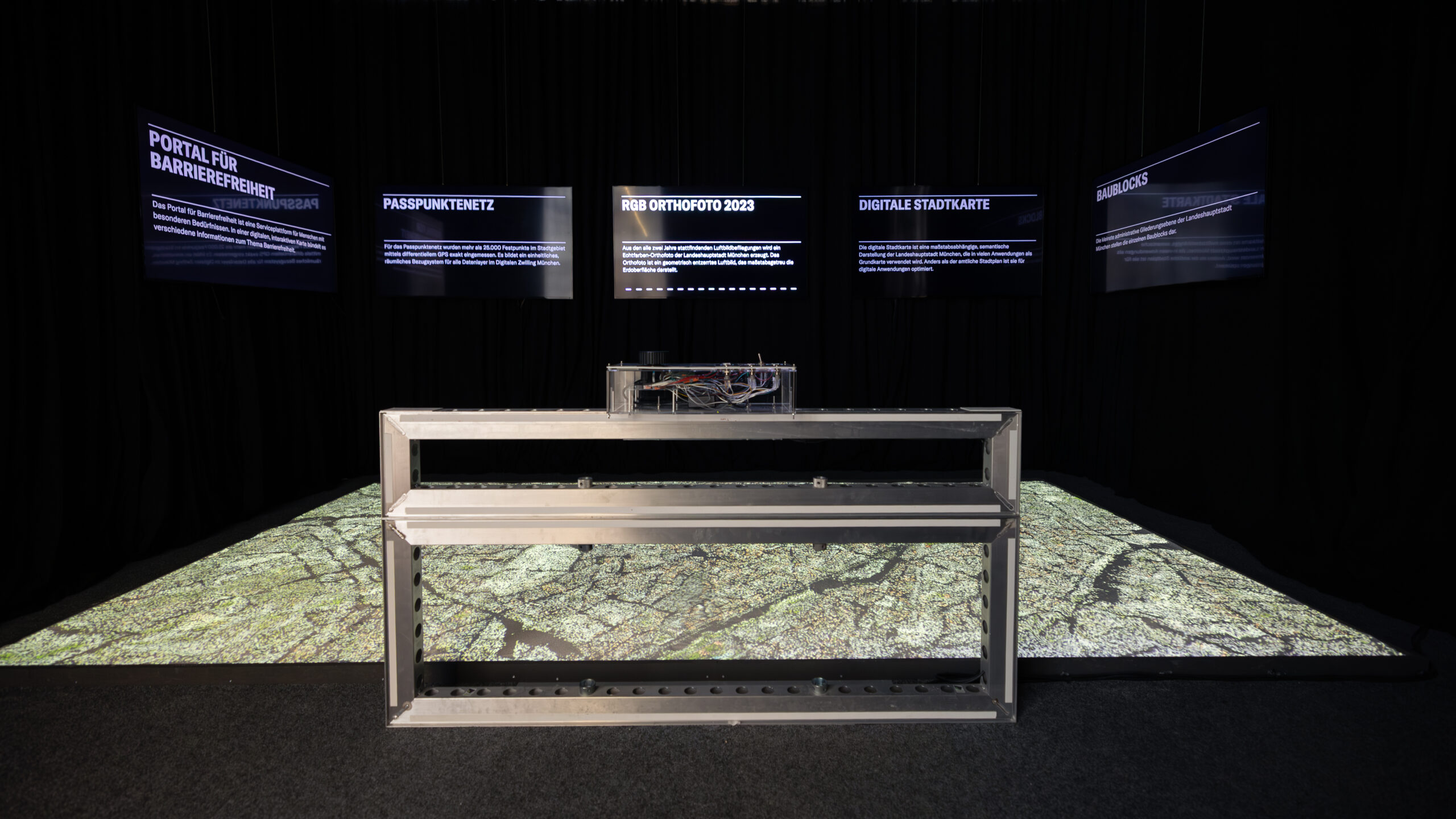
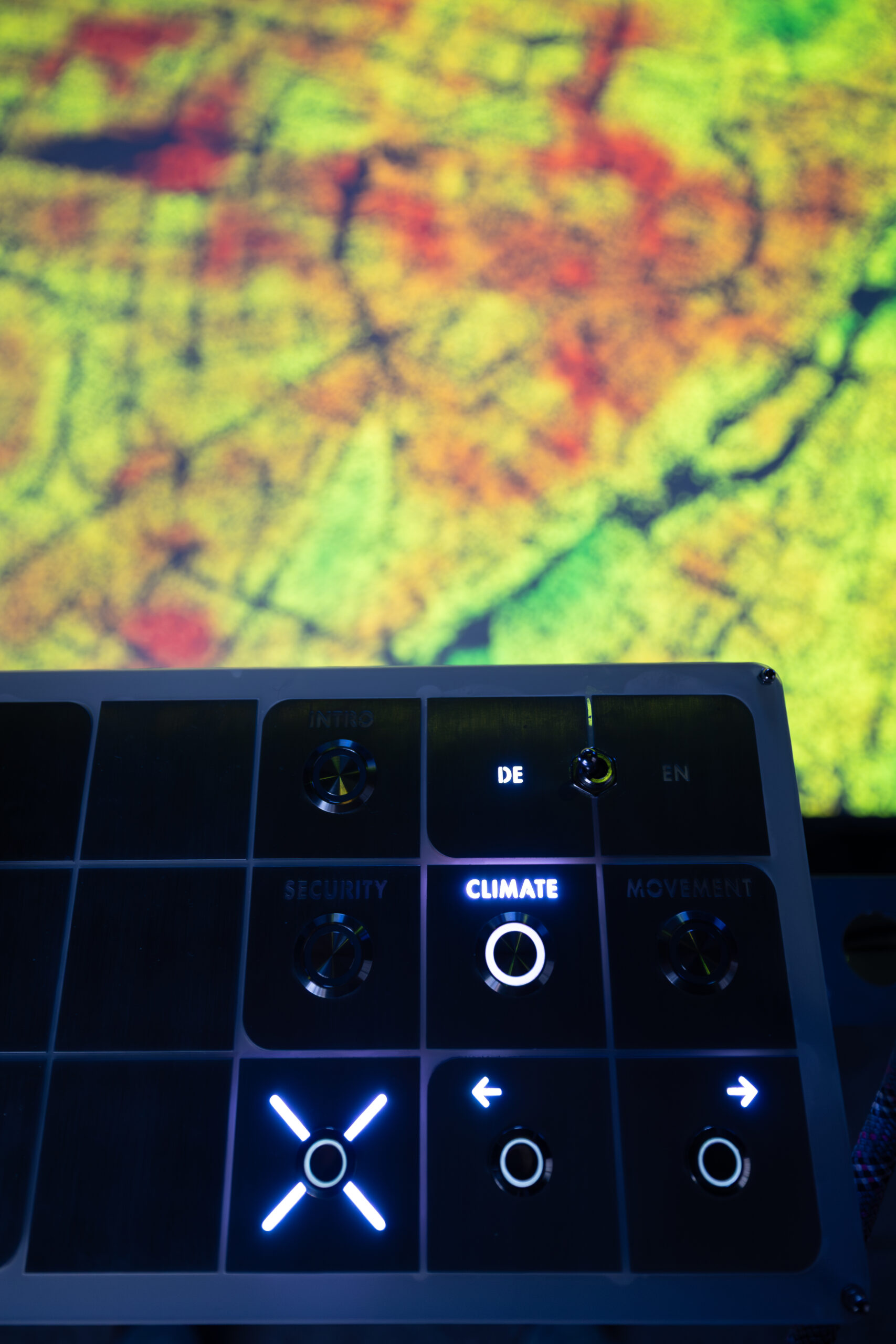
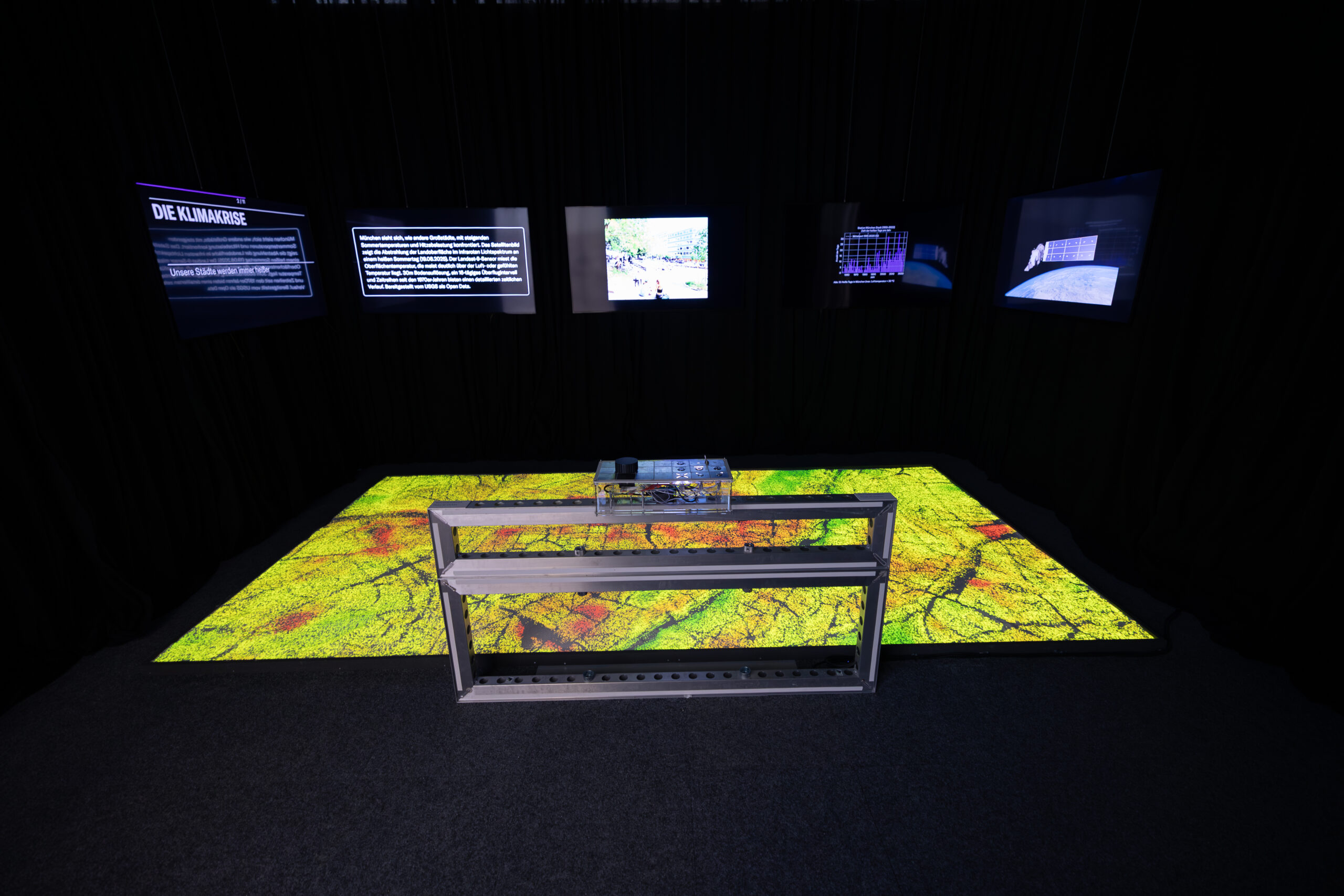
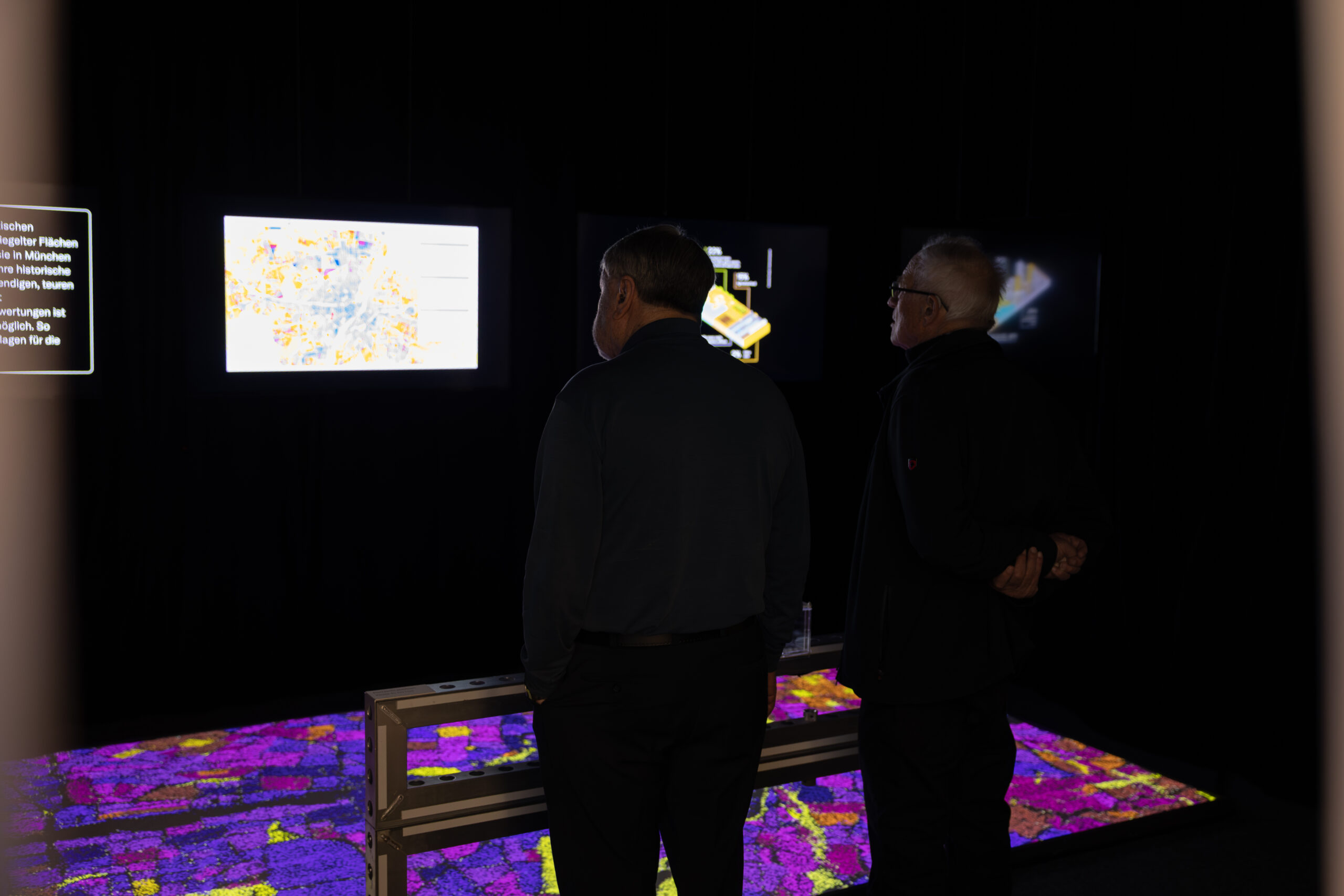
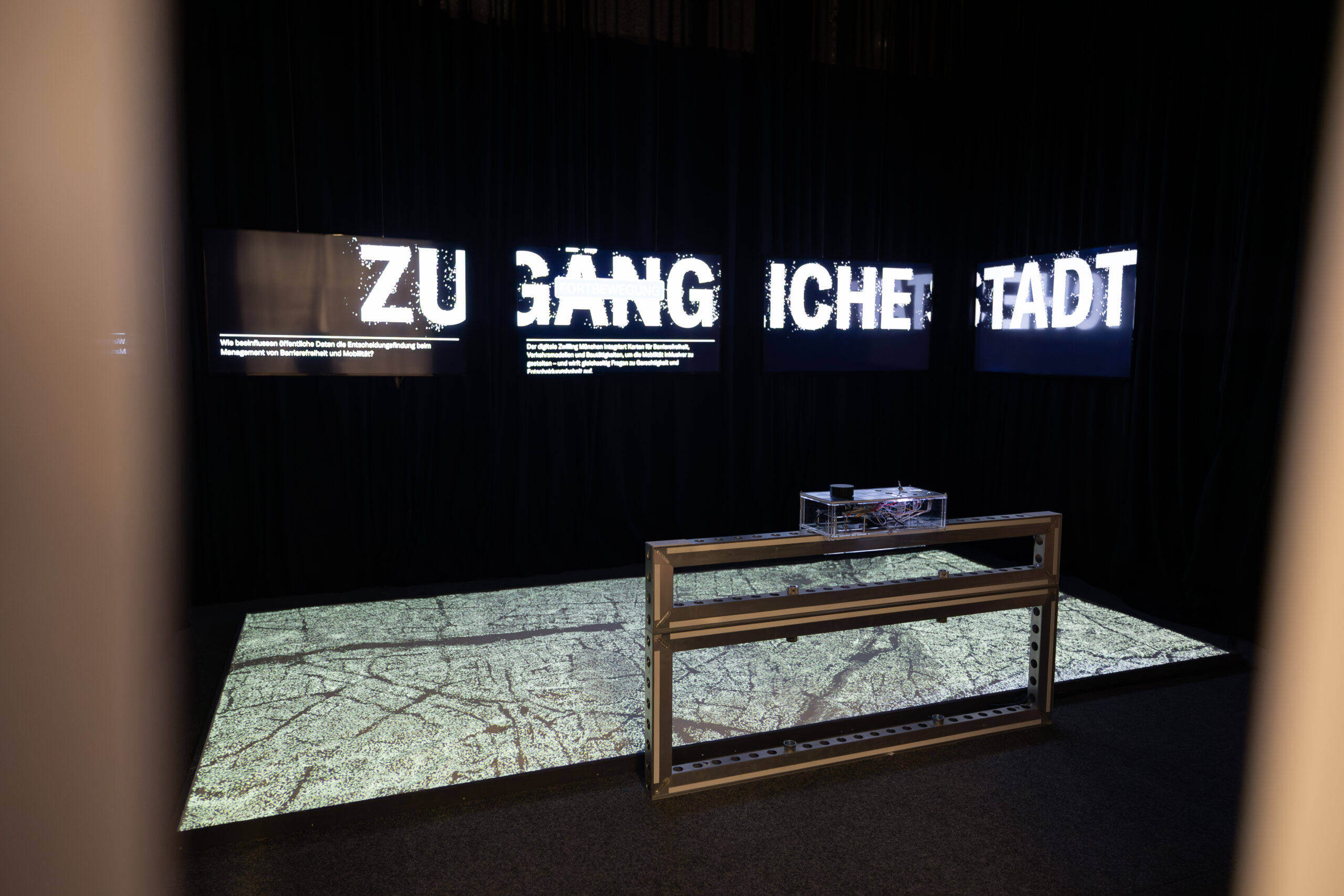
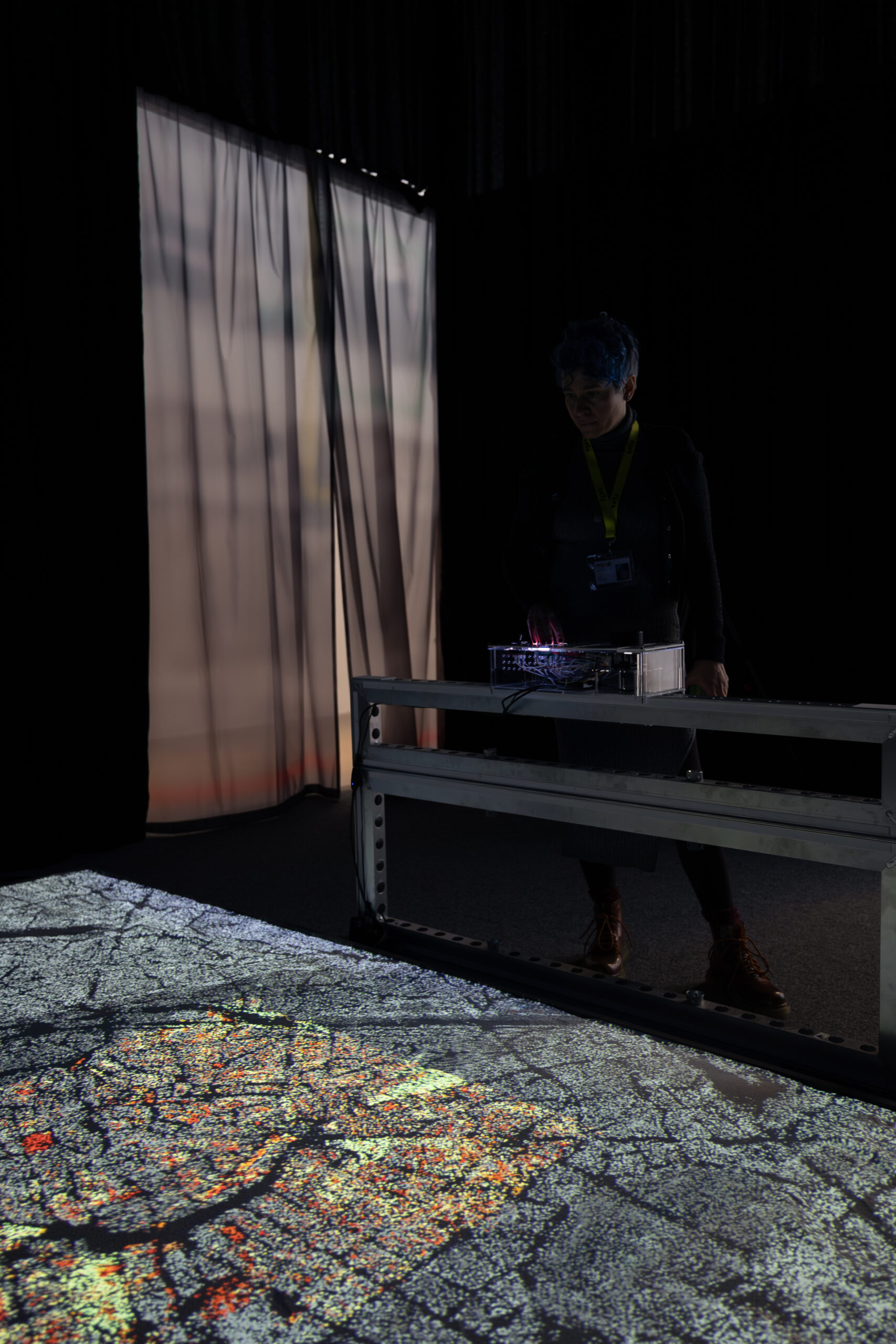
This interactive installation visualizes publicly available smart city data from Munich, offering insight into the vast range of information accessible to citizens, institutions, and industry. Drawing on datasets provided by Digital Twin Munich, Data Soil reveals how data shapes urban life — from infrastructure and mobility to environmental and social dynamics.

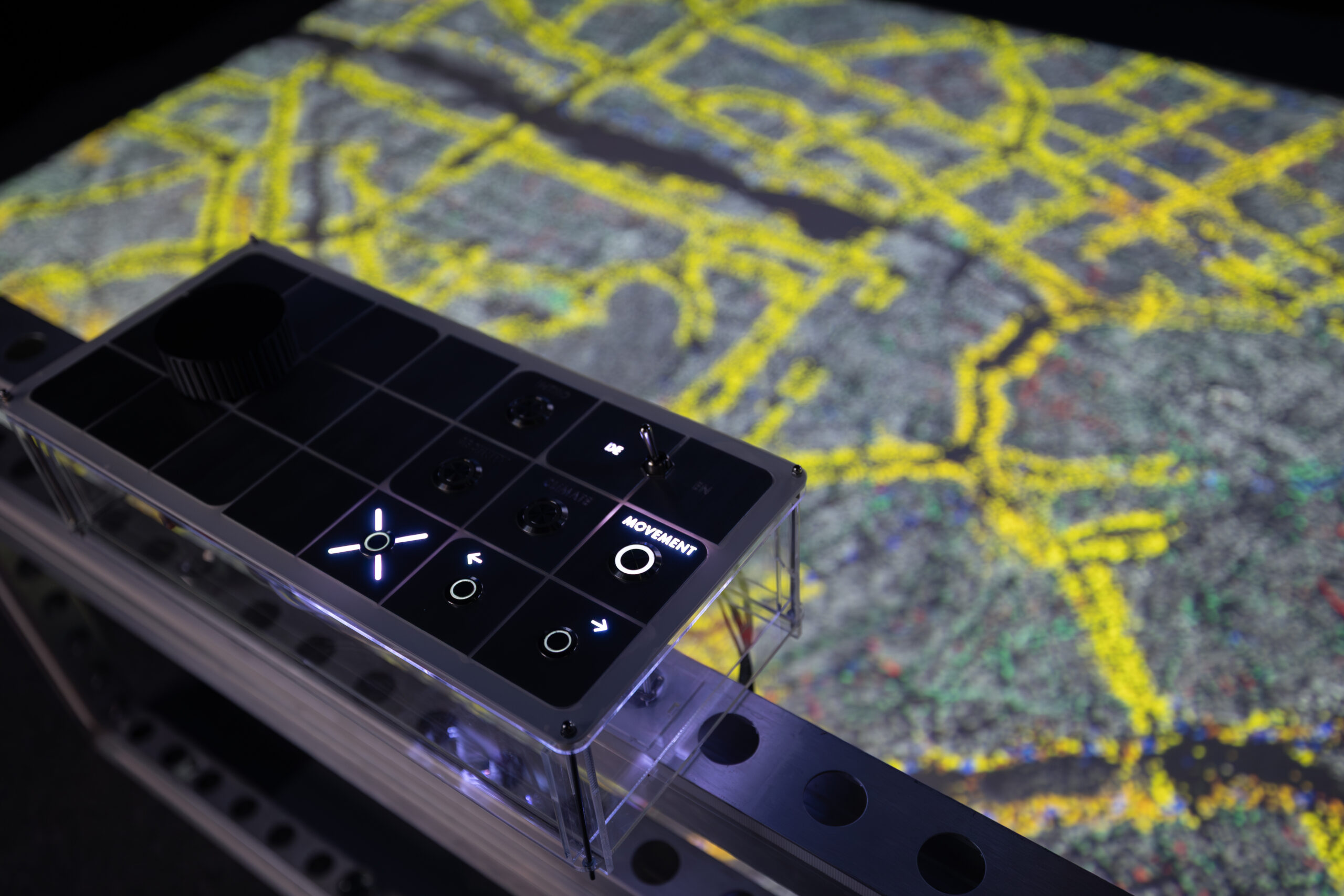
At the heart of the installation is a sea of moving particles, representing an ever-changing continuum of data. In free exploration mode, visitors are invited to navigate this dynamic system without a predefined narrative, uncovering patterns, making connections, and forming their own interpretations. A nearby terminal allows visitors to share their thoughts and reflections after engaging with the piece.

Alongside this open framework, several curated stories highlight how public data is collected, processed, and used to inform policy, design, and civic initiatives. These narratives aim to close knowledge gaps and reveal the real-world implications behind abstract datasets.

In cooperation with

Geodaten Service München
Department of Communal Services
Landeshauptstadt München

Special thanks to

Korbinian Kringer and Markus Mohl
GeodataService Munich

Cable Explorer

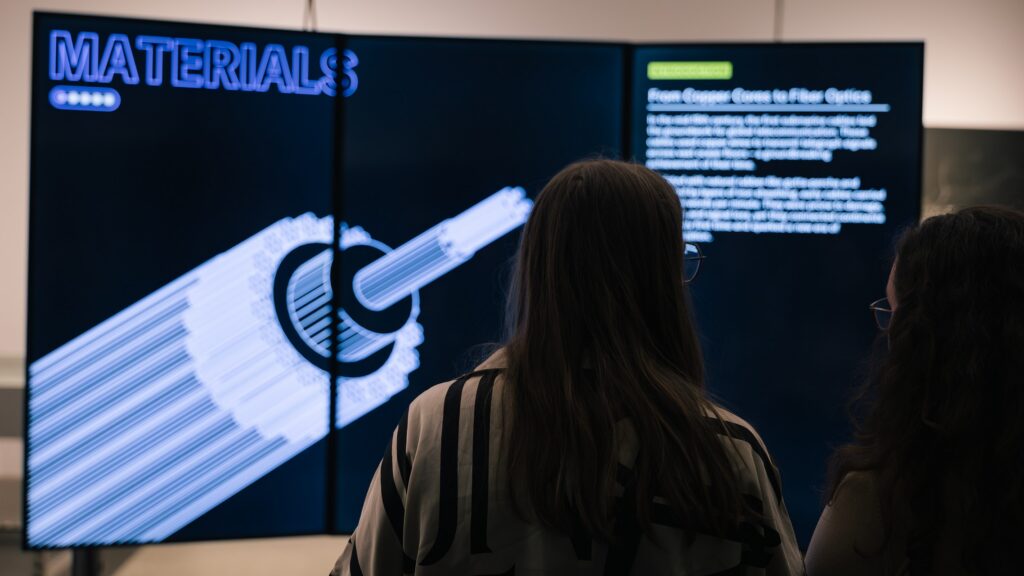
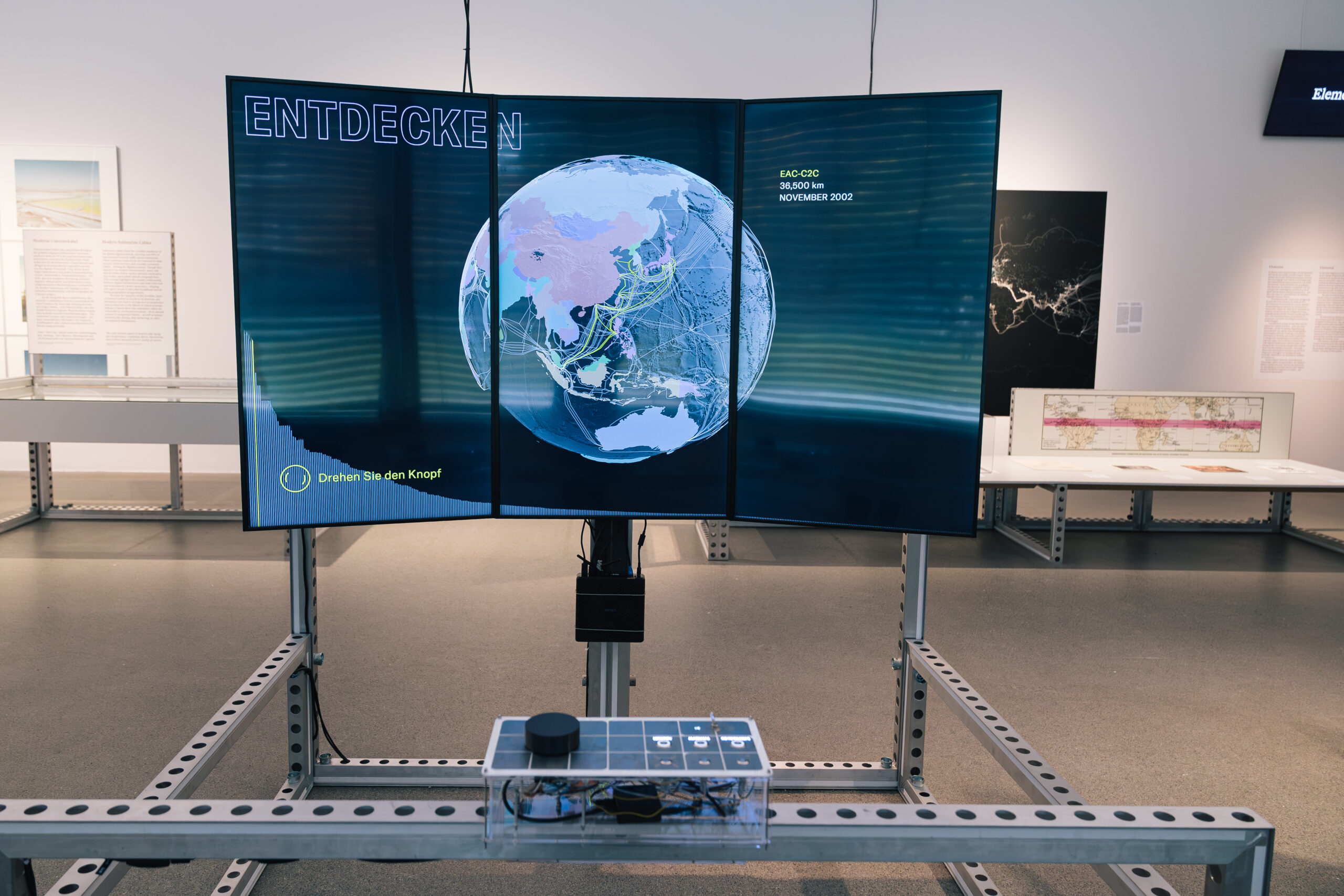
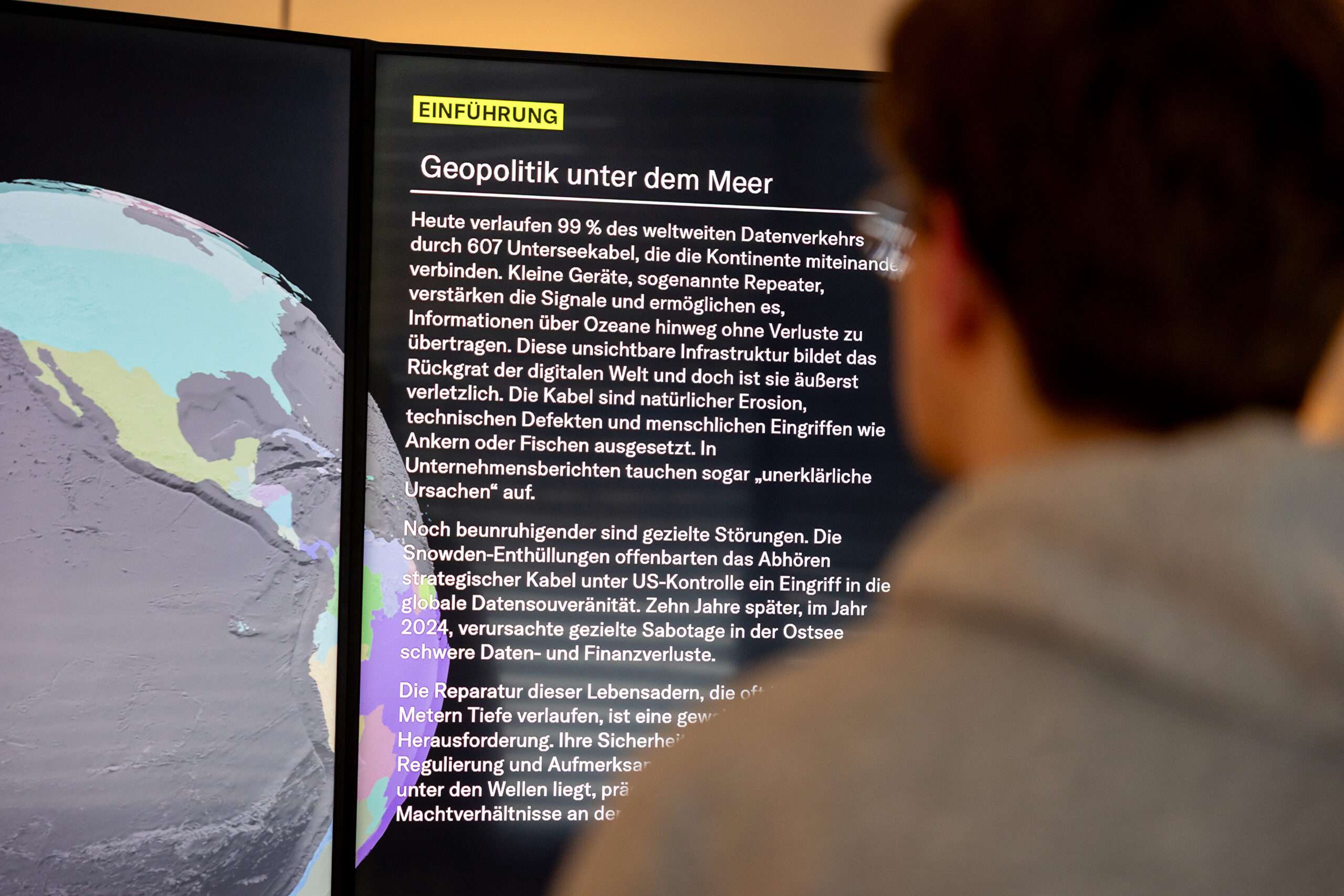
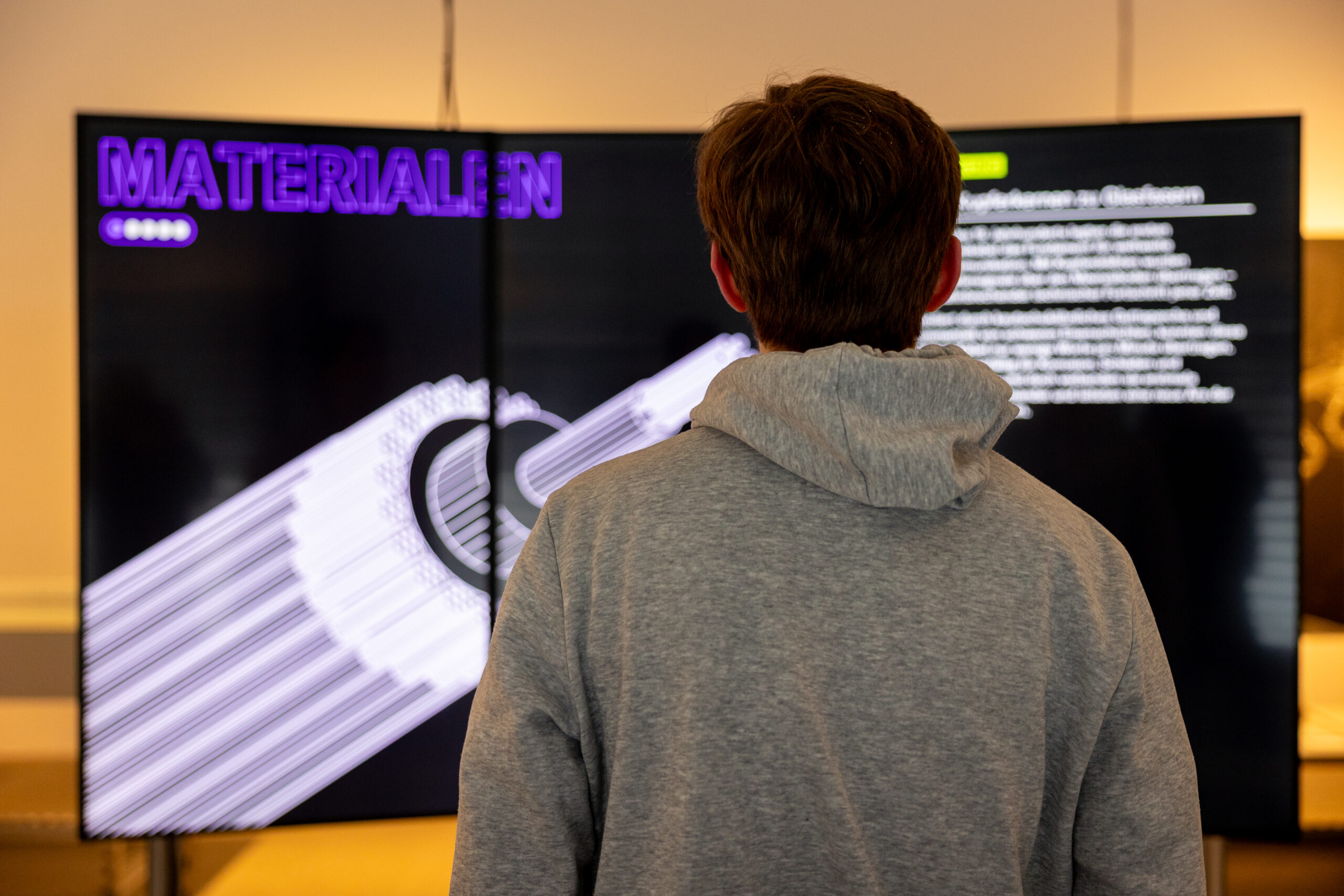
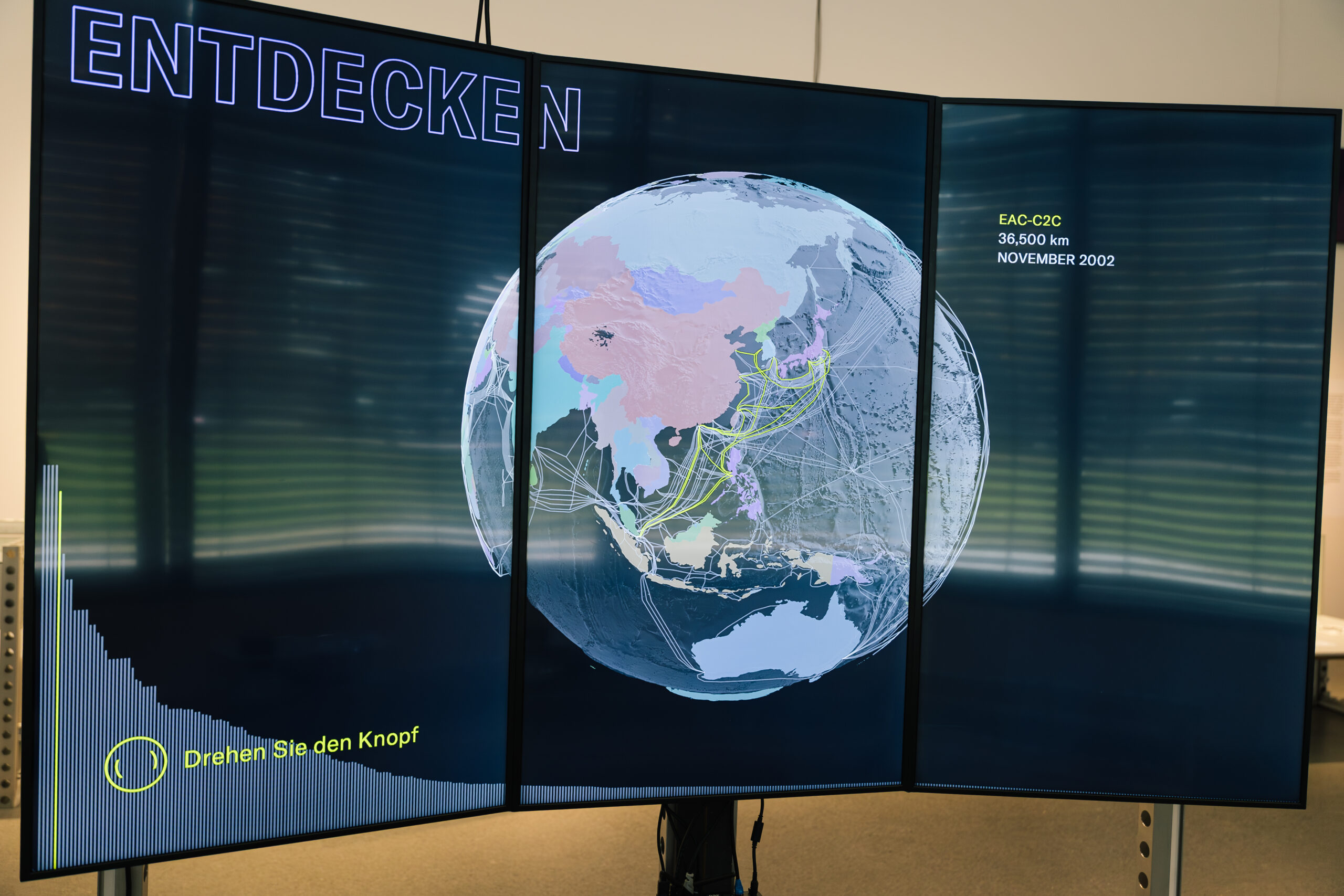
This interactive installation invites visitors to explore the global network of underwater cables that connect continents, data centers, and the services we rely on every day. Supported by infographics that visualize relevant, publicly available metadata, the installation sheds light on the vast yet often invisible infrastructure behind our digital world.

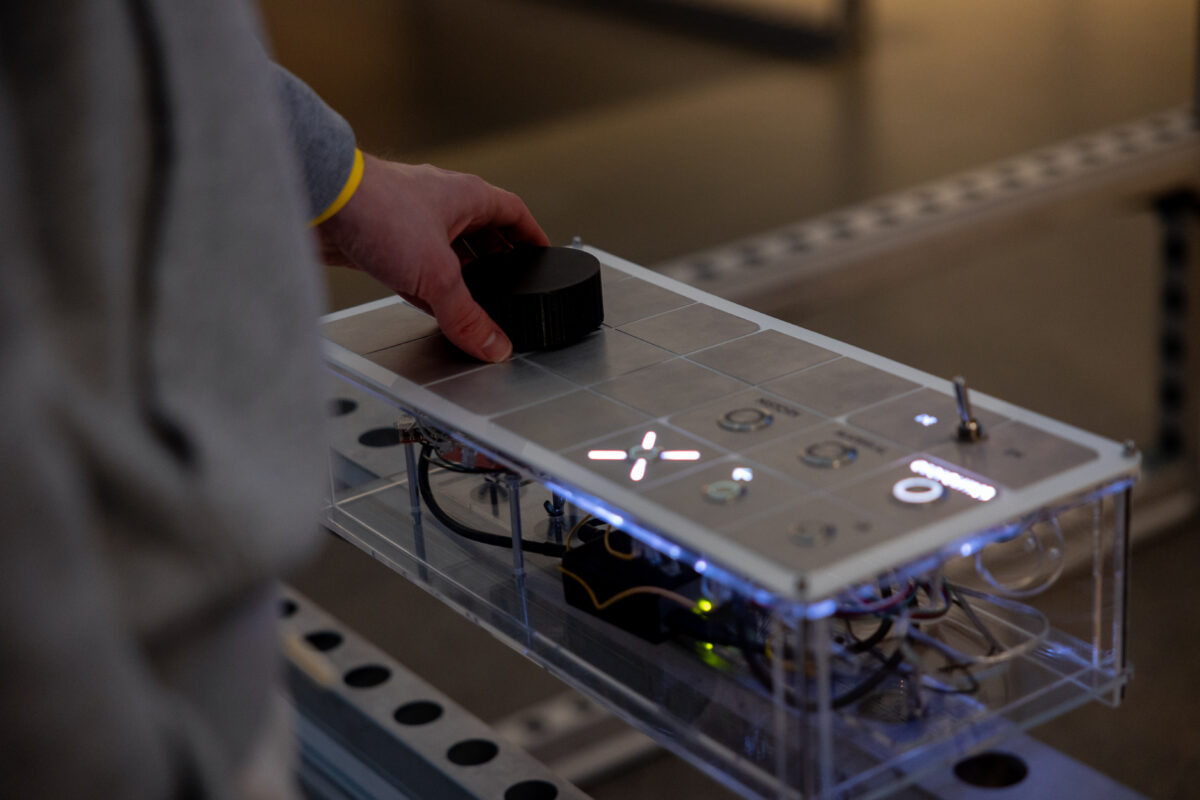
Three core thematic areas, developed in close collaboration with students from the Technical University of Munich (TUM), offer deeper insight into the history, materiality, and geopolitical dimensions of submarine data cables. Use the control panel in front of the installation to navigate this intricate system, or dive into one of the three focus stories for a closer look at the narratives shaping this critical global infrastructure.

Story Development

Paula Löffler
Bruno Heringer
Günter Merk

Live Captions

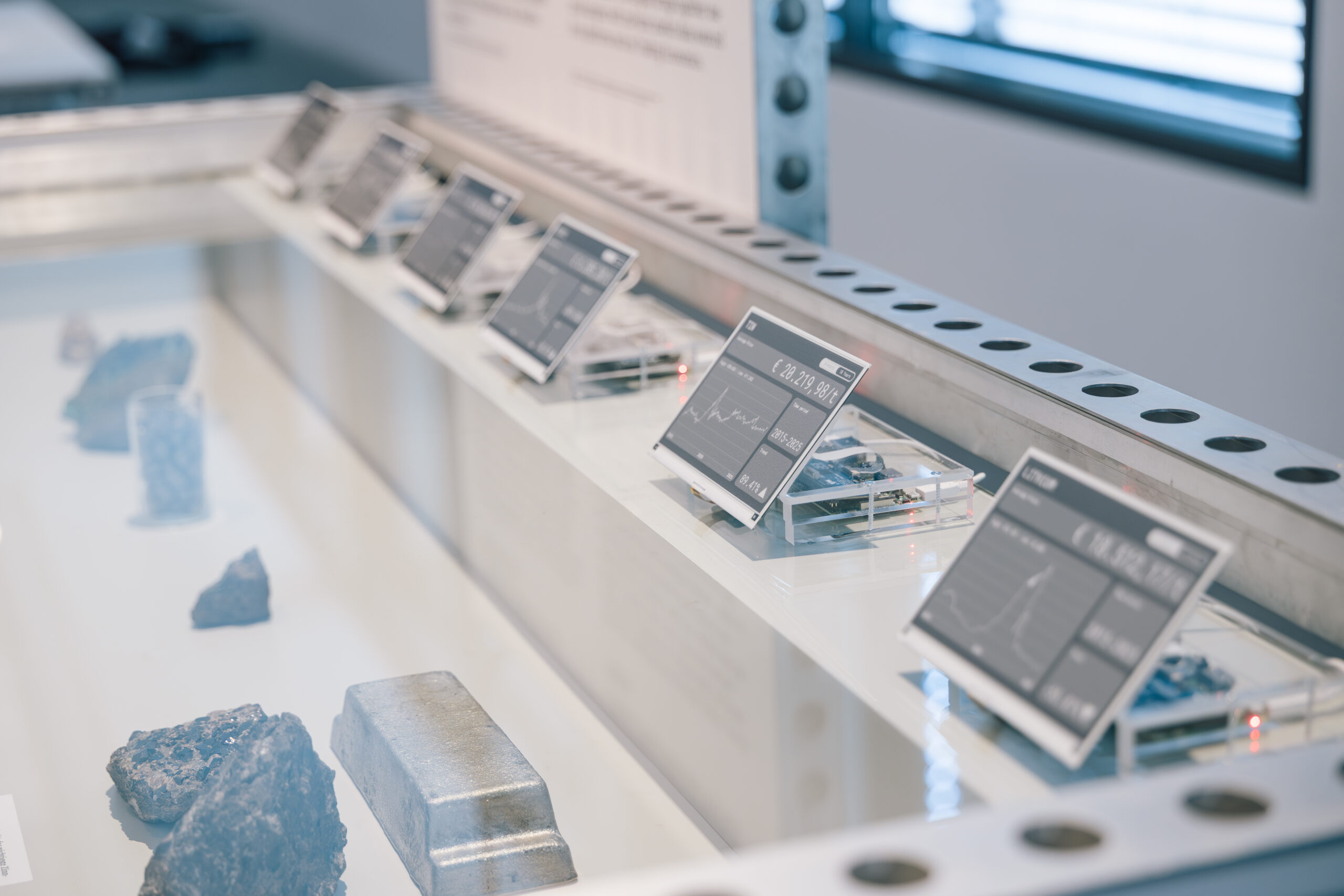
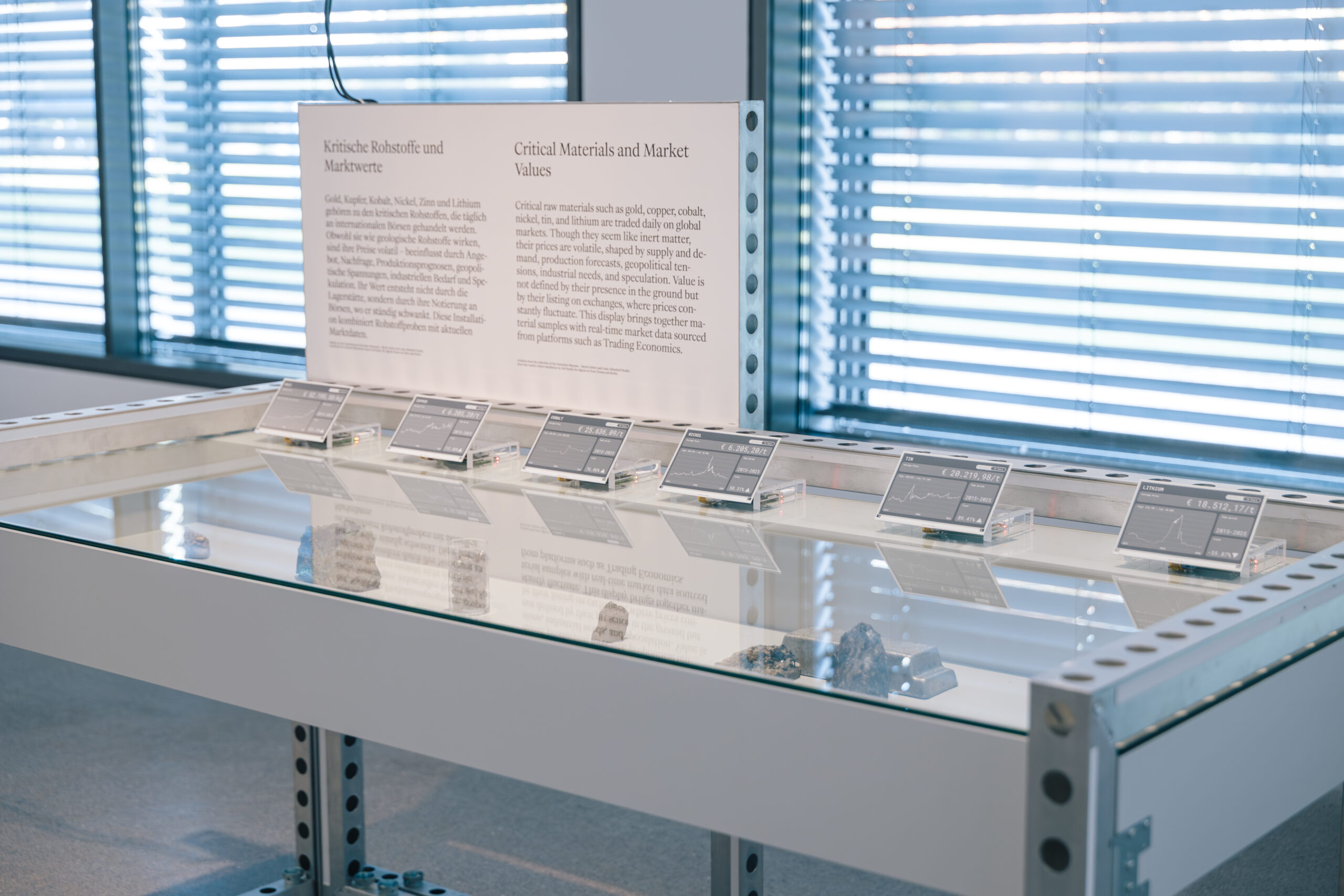
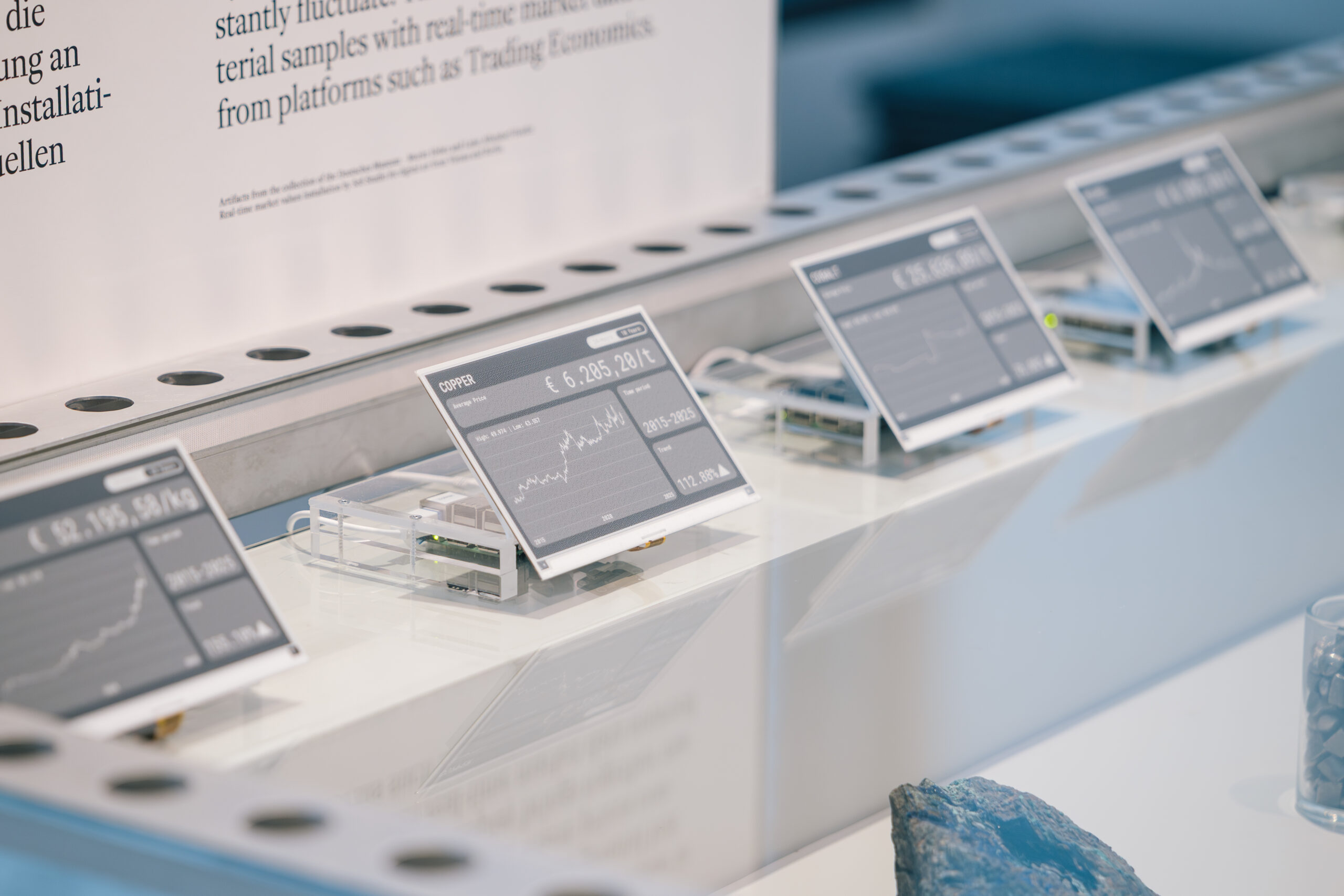
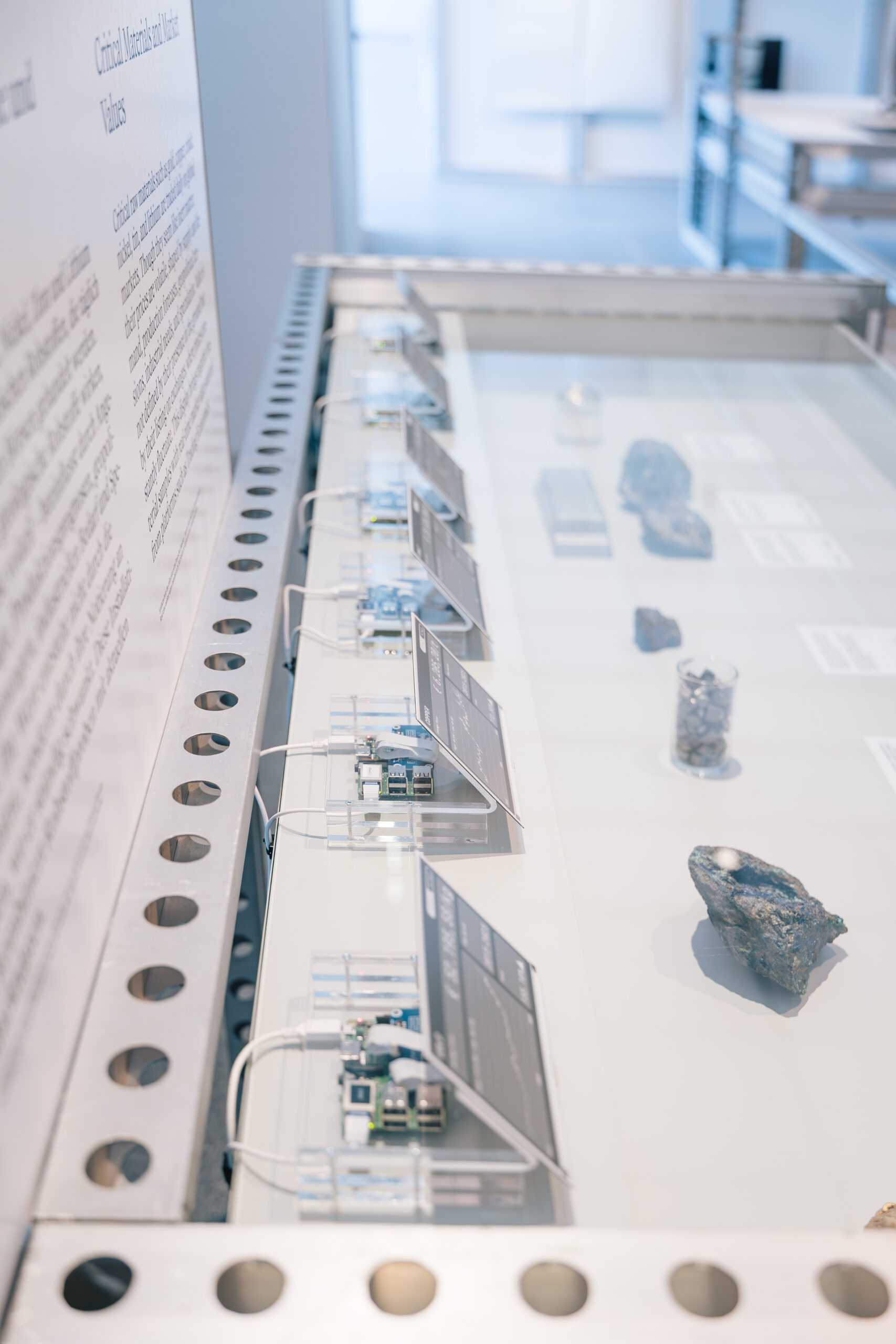
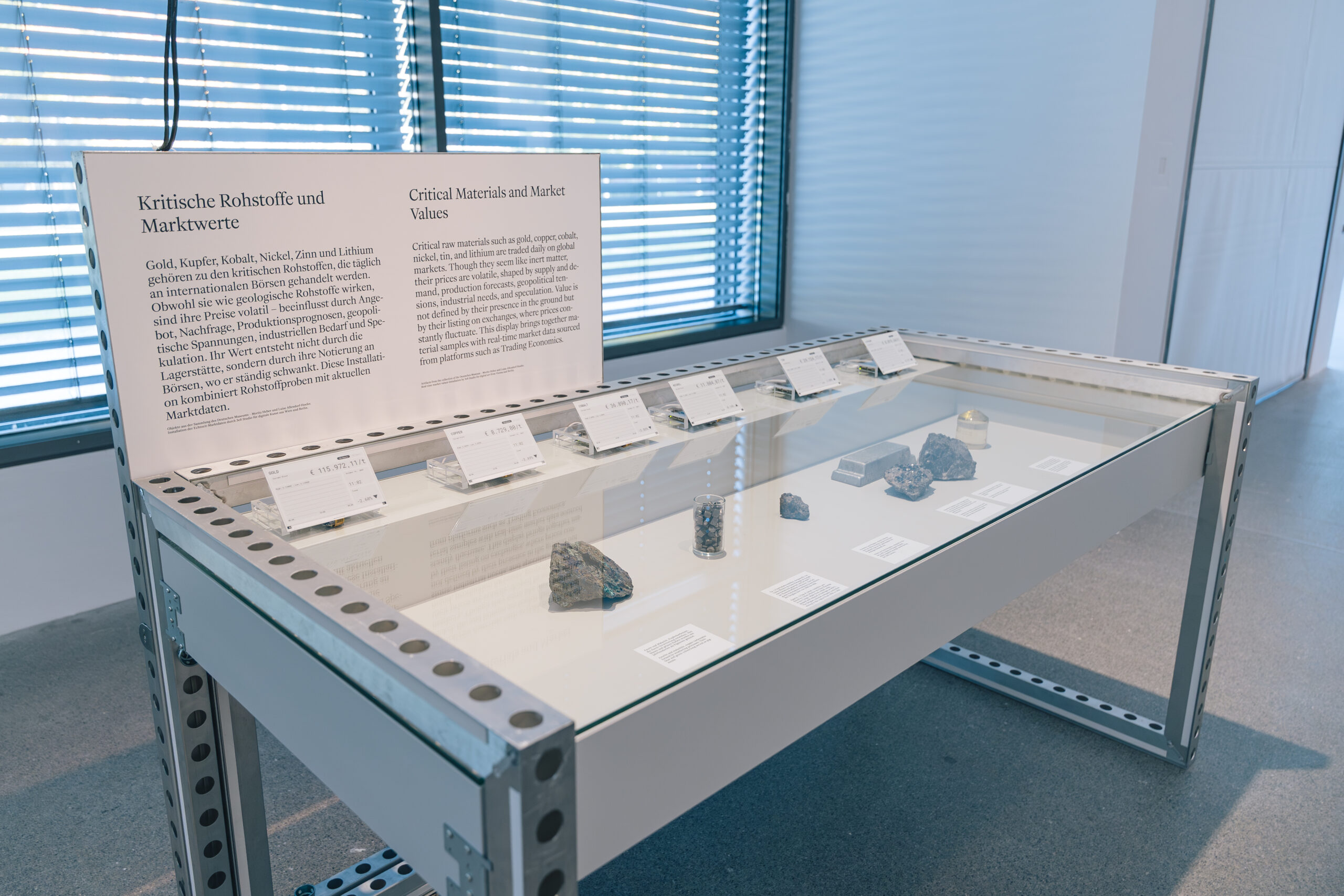
Critical raw materials such as gold, copper, cobalt, nickel, tin, and lithium are traded daily on global markets. Though they seem like inert matter, their prices are volatile, shaped by supply and demand, production forecasts, geopolitical tensions, industrial needs, and speculation. Value is not defined by their presence in the ground but by their listing on exchanges, where prices constantly fluctuate.

This display combines material samples with real-time market data from platforms such as Trading Economics. It highlights the disconnect between physical reality and economic abstraction, prompting reflection on value, control, and what remains hidden beneath the surface.

Artifacts from the collection of the Deutsches Museum – Moritz Heber and Luise Allendorf-Hoefer.