Space: Exhibition Concept for Lokschuppen Rosenheim
In December 2025, Lokschuppen Rosenheim invited us to take part in a tender for the design of their next special exhibition, on the subject of “Space.” For us, this was a deliberate step: entering the European public tender market, supported by the “Förderung Markteintritt” grant from Wirtschaftsagentur Wien.
The process ran in two stages. For the first round, we submitted a short introduction video and a three-minute elevator pitch presenting our initial conceptual ideas for the exhibition. On the strength of that application, we were invited into the second round as one of five offices.
The second stage asked for an overall concept, an exhibition walkthrough, and a visual identity, along with the detailed development of one complete room and its media stations. To cover every area well, we brought in partners: CPWH took on exhibition design, scenography, and construction management; PARAT.cc handled exhibition graphics and interaction design; and Jonathan Steil contributed the light design and the atmospheric visual language of the presentation.
We presented in Rosenheim on March 25th, 2026. In the end, we didn’t win the tender — but the concept we developed is one we’re proud to share.
Our Team
Felix Betzenbichler – Production Lead
Rosa Havel – Concept & Production
Bessie Normand – Graphic Design
Ilina Kokaleska – Concept & Exhibition Design
Partner
CPWH – Exhibition Design, Scenography
PARAT.cc – Exhibition Graphics, Interaction Design
Jonathan Steil – Lighting Design
Funded by
Wirtschaftsagentur Wien
Typefaces
ABC Schengen by Dinamo
The Concept: From the Universe to Earth
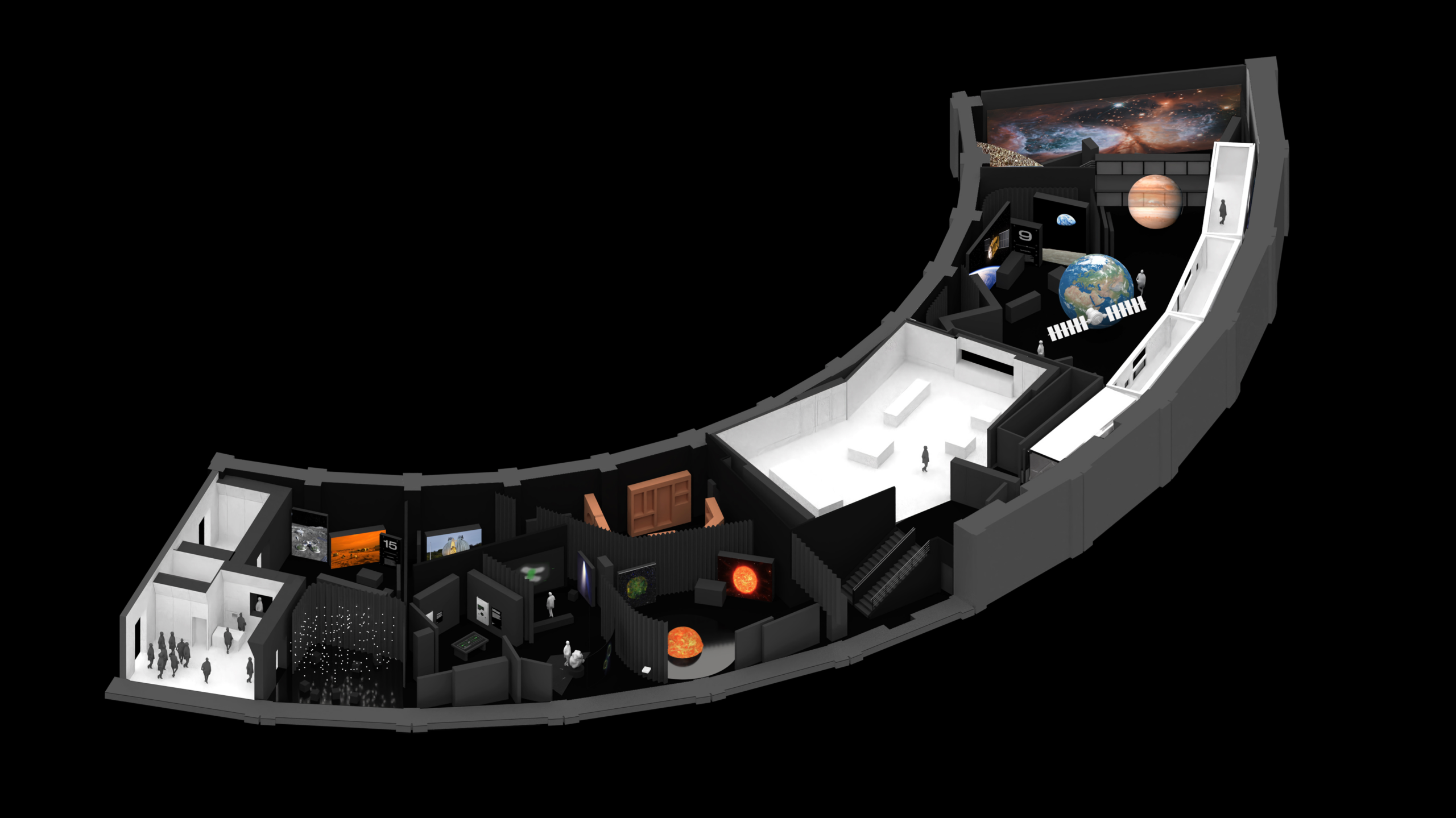
We approached the theme as a movement from the large-scale to the detail: the exhibition begins with the universe as a field of action, moving through fundamental physical relationships and the formation of stars and planets, through to spaceflight and science on Earth. Not a chronology, but a thematic condensation.
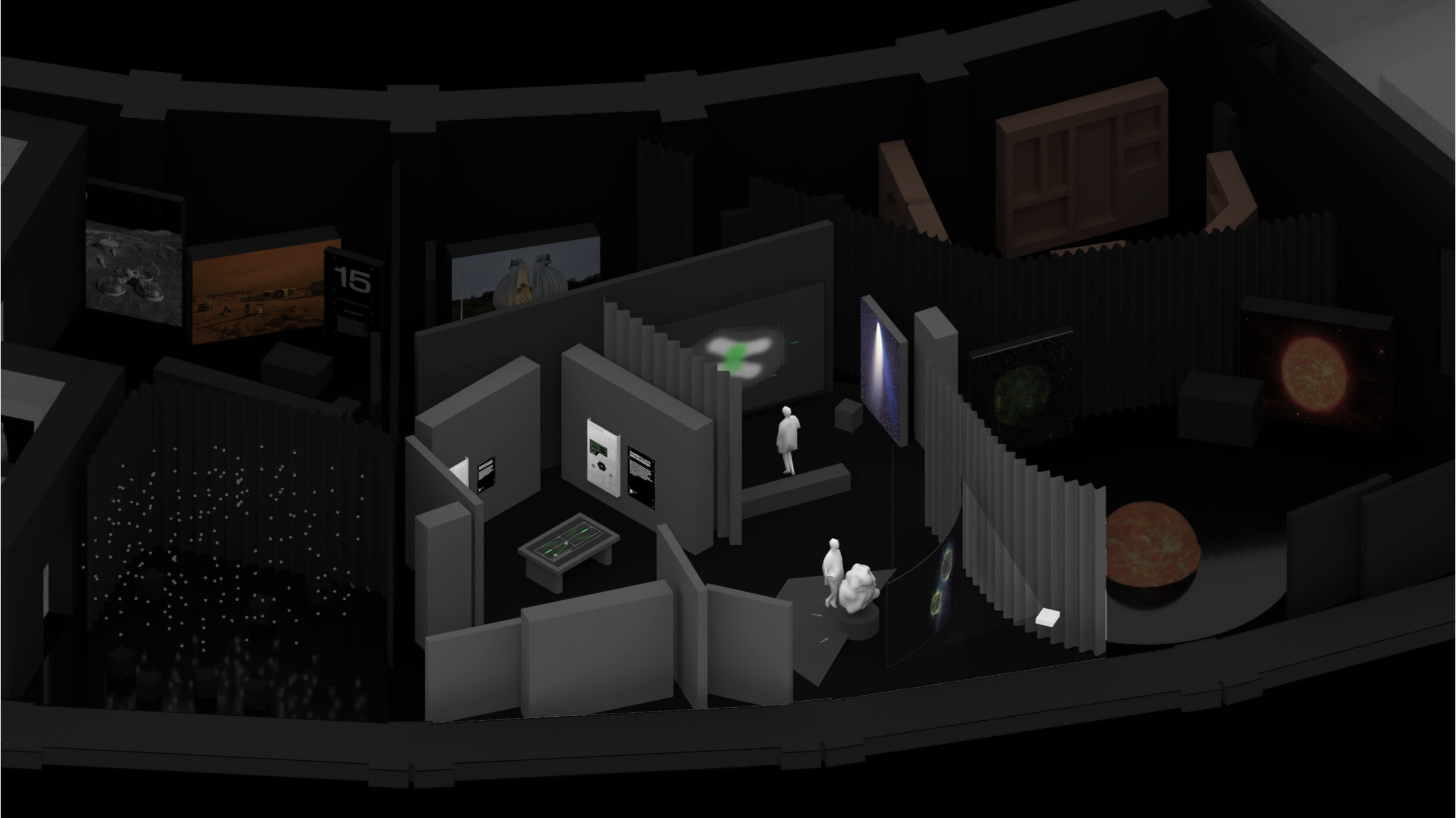
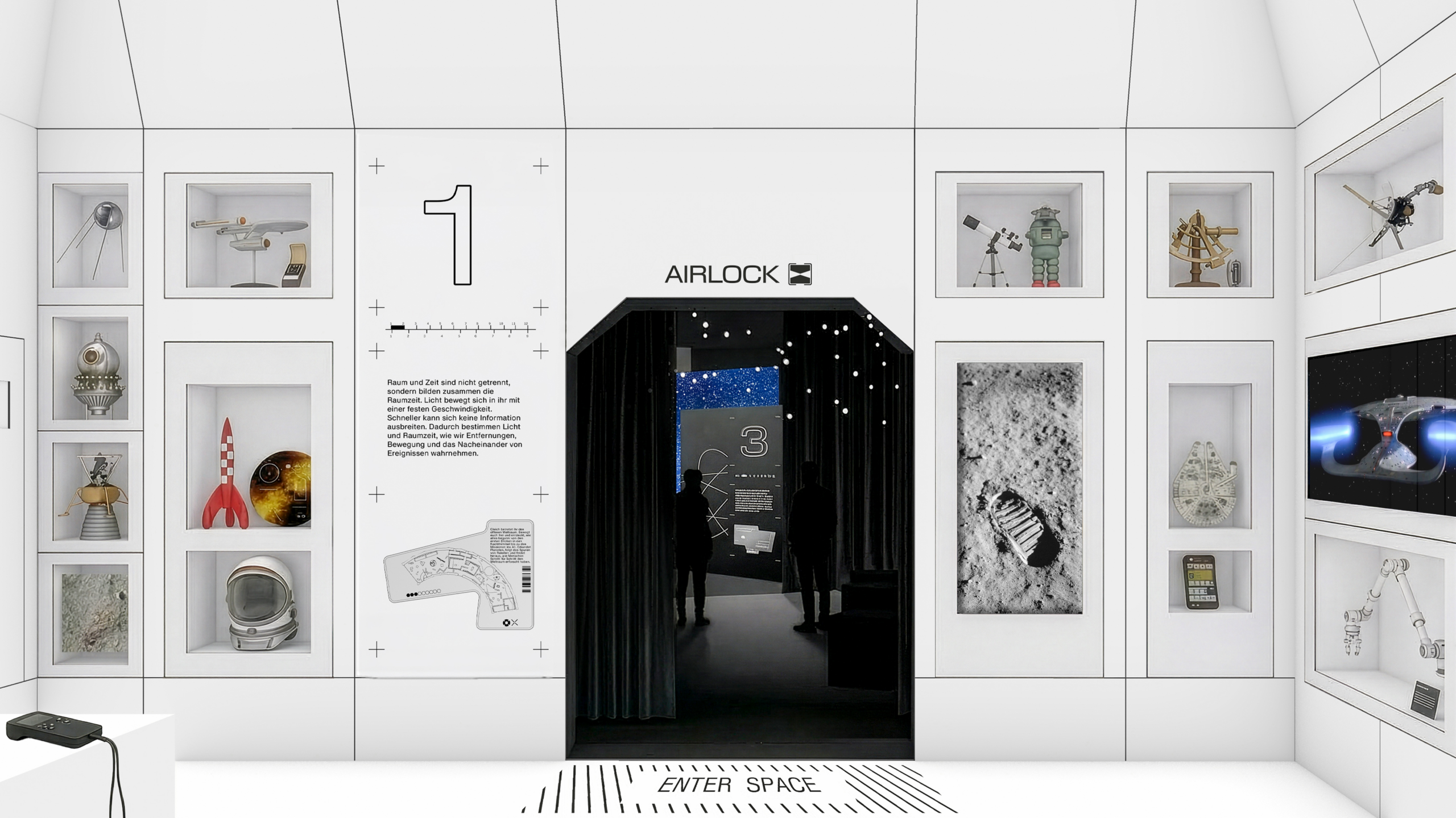
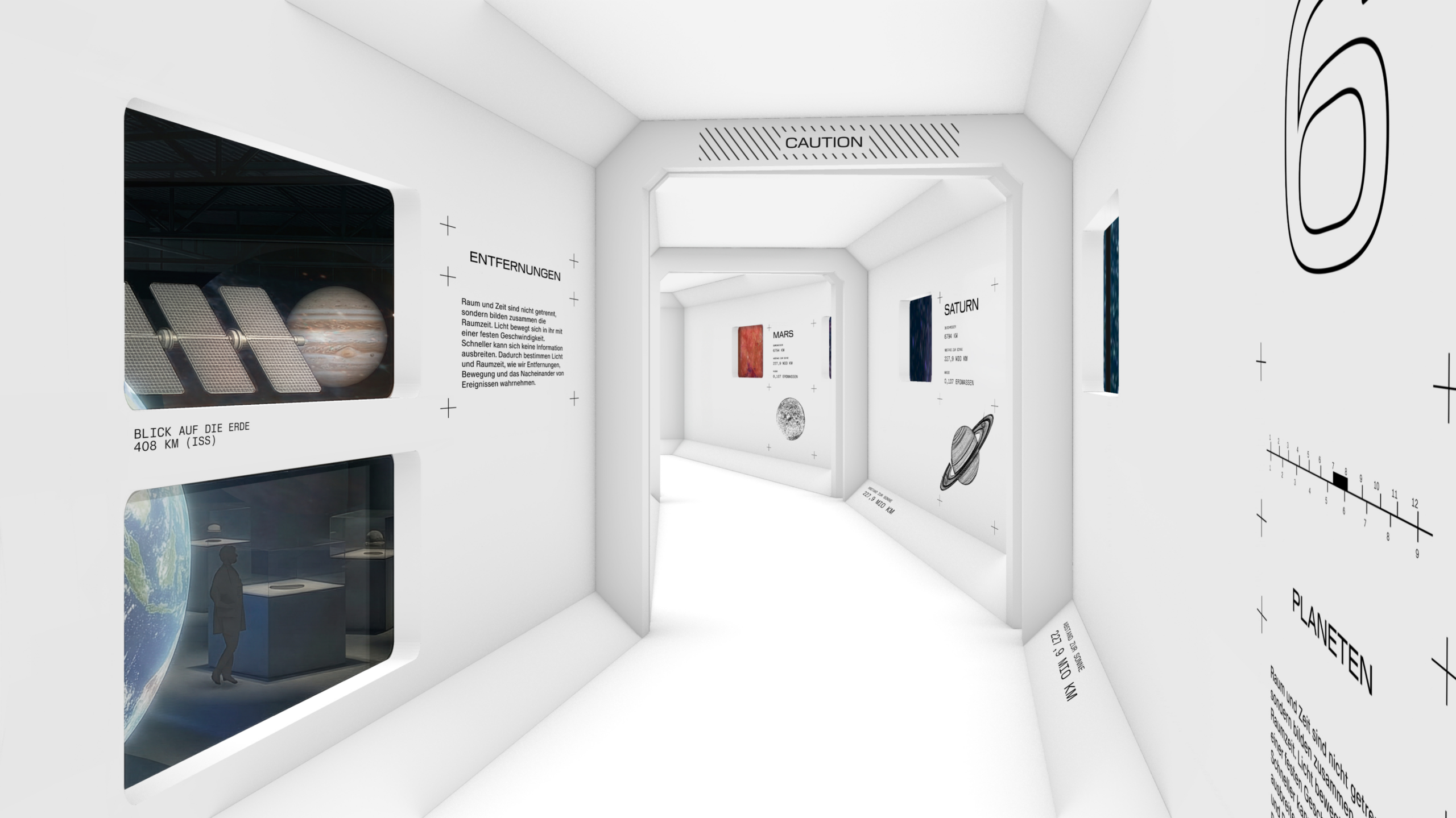
CPWH translated this narrative thread into space: the walkthrough alternates deliberately between bright, technically styled interiors and dark, seemingly boundless exterior spaces. CPWH’s visual language consciously draws on science fiction aesthetics and makes them productive for a scientific exhibition context. Windows and transitions between rooms function architecturally as connective elements that carry meaning.
The Wupsi
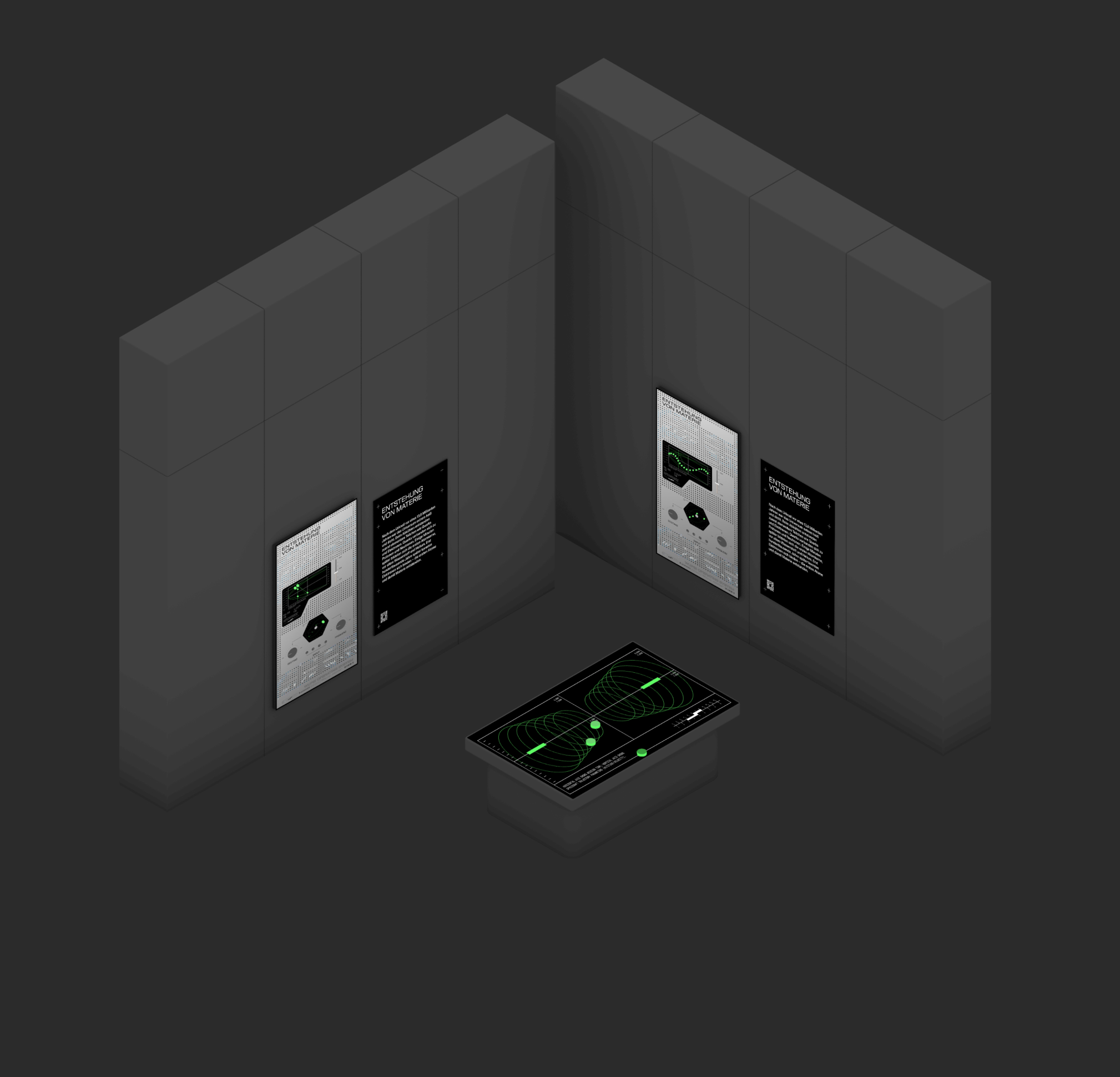
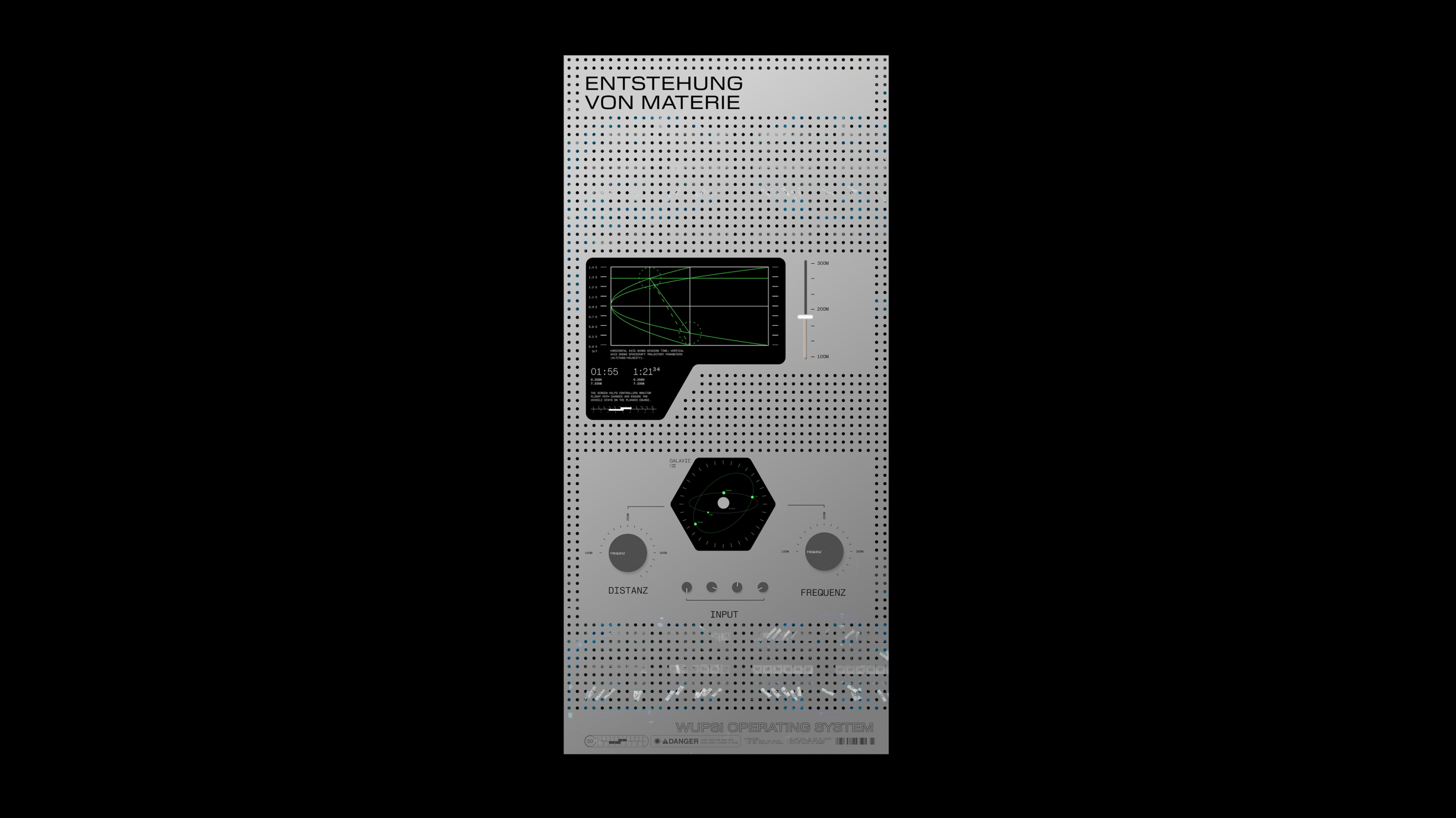
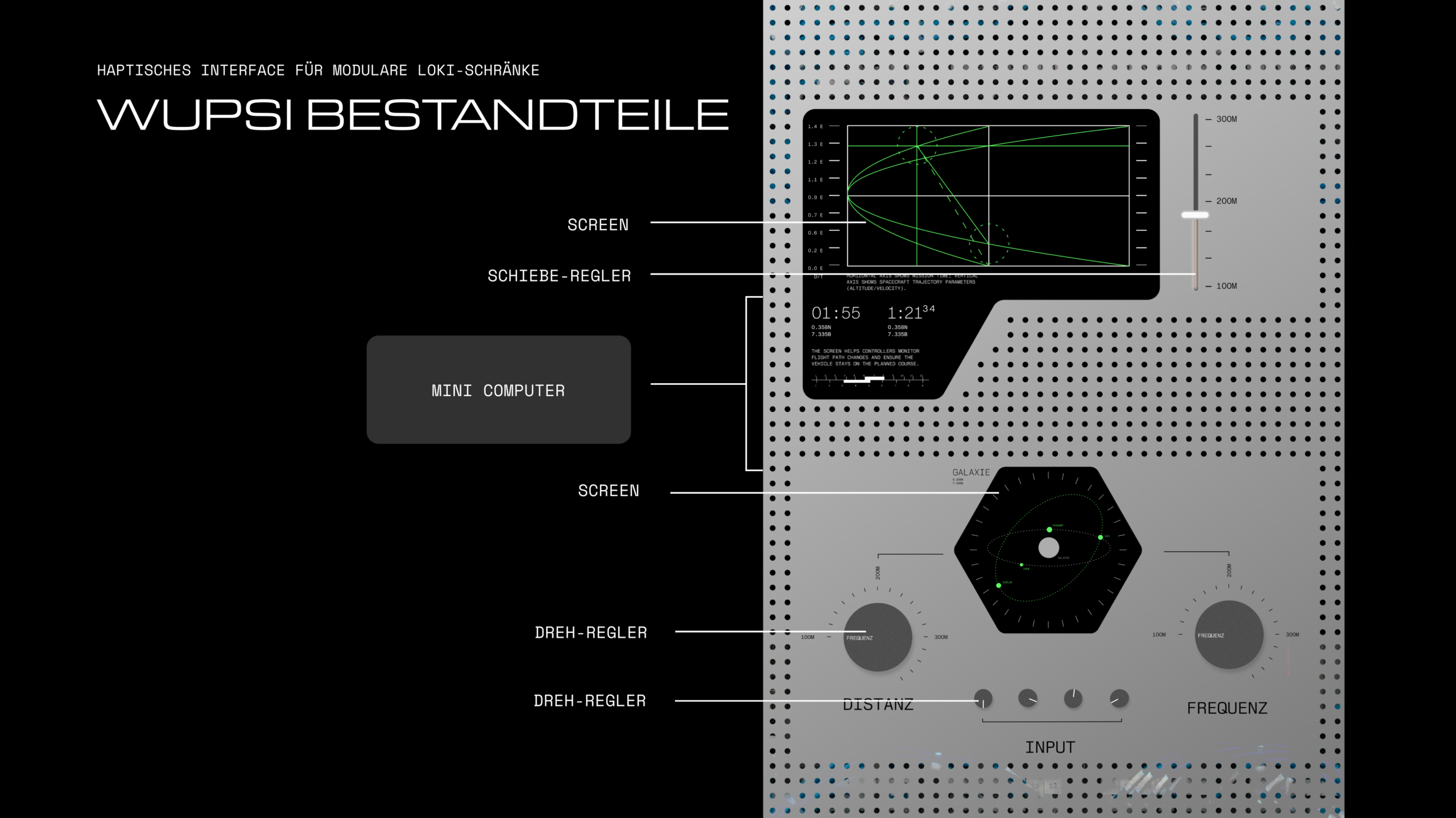
For the media stations, we developed the Wupsi: a modular, haptic interface designed to integrate seamlessly into the existing modular wall elements of the Lokschuppen. Rather than conventional touchscreens, the Wupsi is built around a hybrid analogue-digital concept. It reads like a technical instrument, one that uses physical interaction to navigate the digital information layer. The construction consists of three layers: a laser-cut perforated metal front, an acrylic glass chassis as the structural carrier, and the displays behind. The sandwich design keeps the electronics accessible without requiring the front panel to be removed or damaged. The Wupsi is modular and can be deployed at different points throughout the exhibition, with content that can be configured flexibly, developed together with curators and scientists.
Three Interactive Media Stations
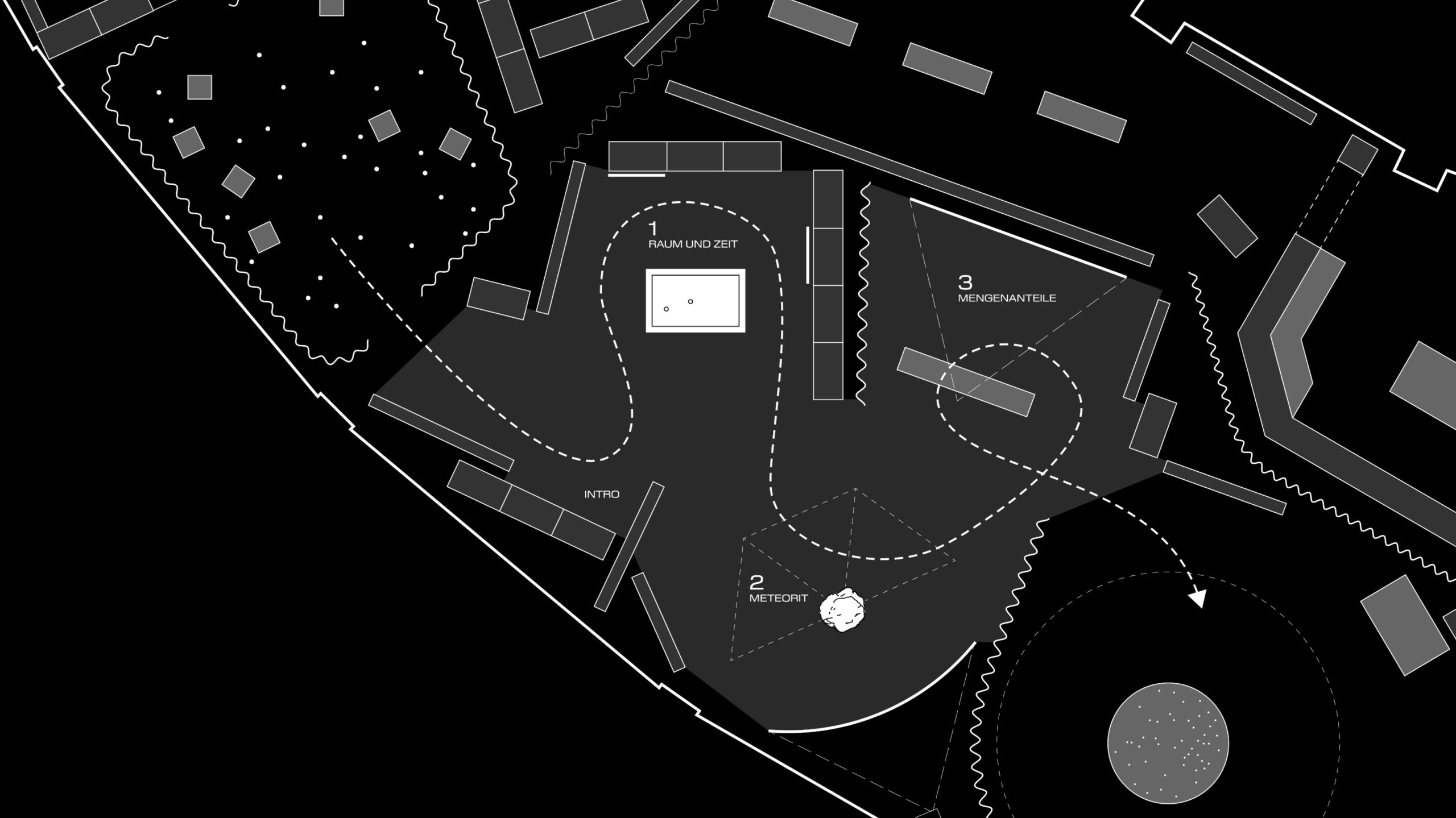
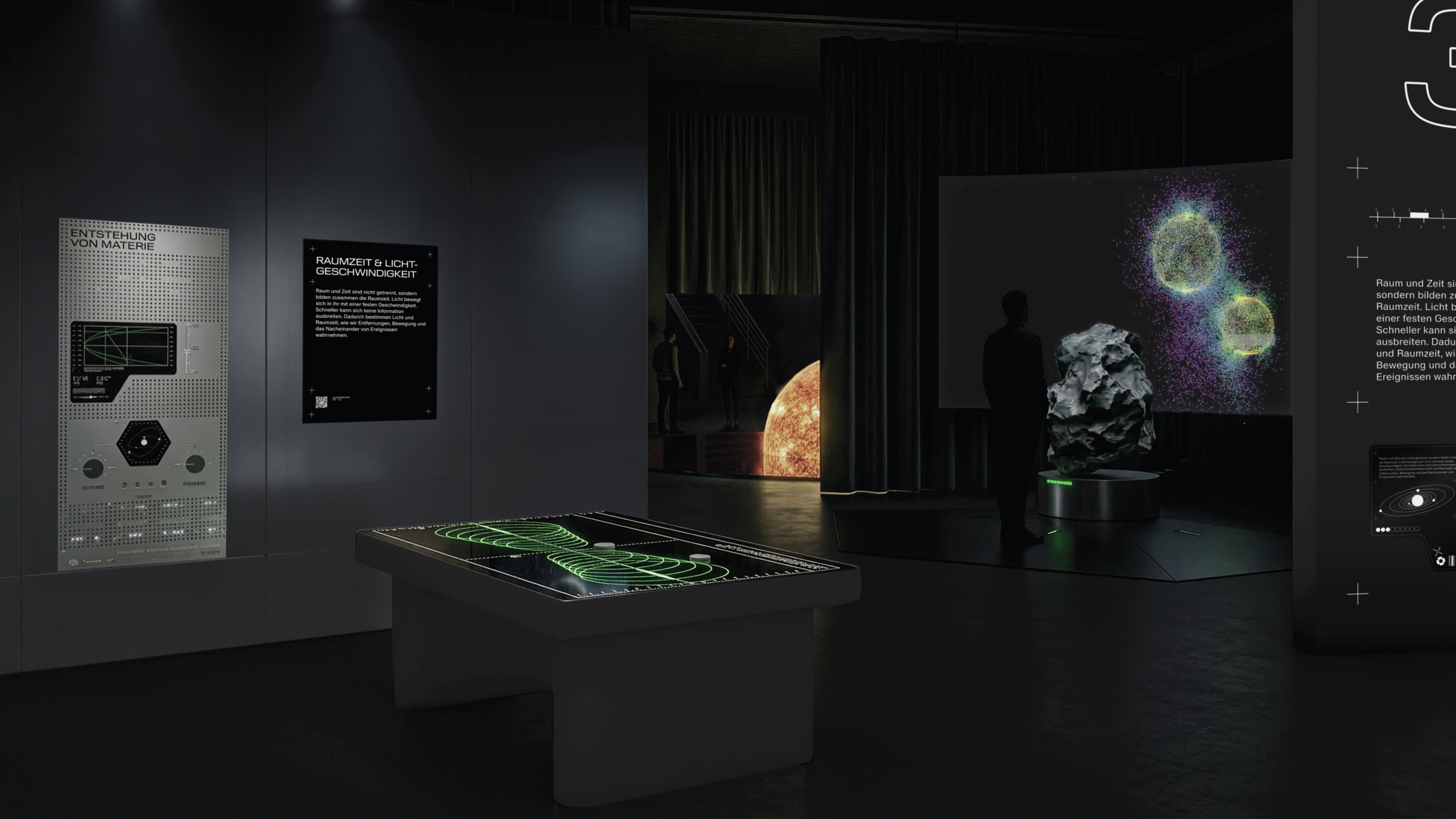
Room 3, which the tender specified for detailed development, focuses on physics and matter. Its three stations are deliberately designed with varying levels of intensity. Between dense content, visiorts need moments to breathe.
Station 1 – Space and Time – is the most content-dense of the three. It consists of two Wupsi units and a central touchtable. The Wupsis convey spacetime, the speed of light and geavity through haptic controls: rotary and slider elements drive the digital content layer, replacing touchscreens entirely. The touch table at the center, with object recognition and simultaneous multitouch interaction for up to ten people, handles the deeper engagement and is particularly well suited for guided tours.
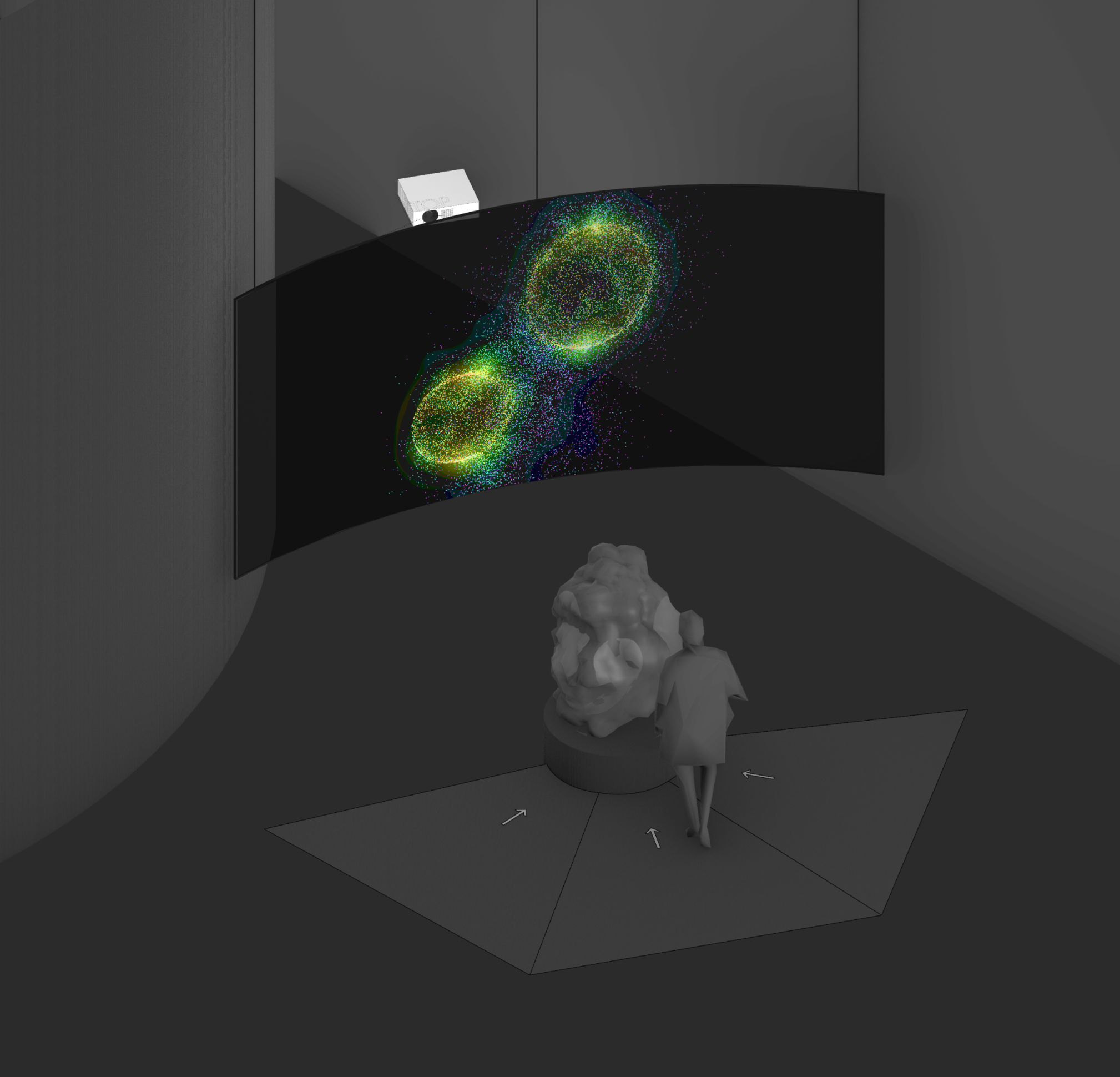
Station 2 – Meteorite – reduces interaction to the essentials. At its center is a real meteorite. As hands approach the stone, projection and sound respond in real time: the more people interact simultaneously, the stronger the effect. Electromagnetic repulsion becomes physically tangible. We built the interaction logic as a working prototype and demonstrated it live during the presentation.
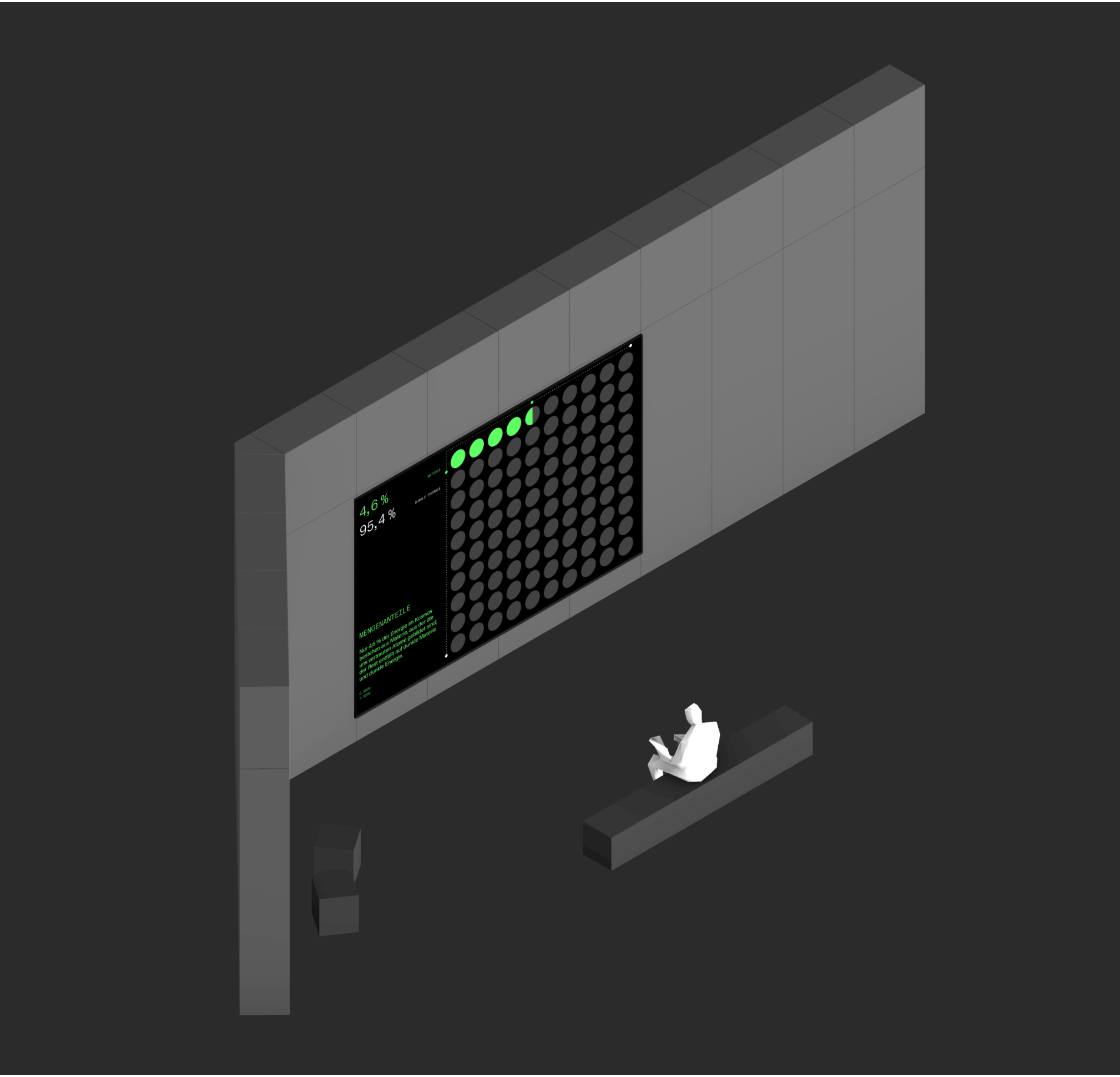
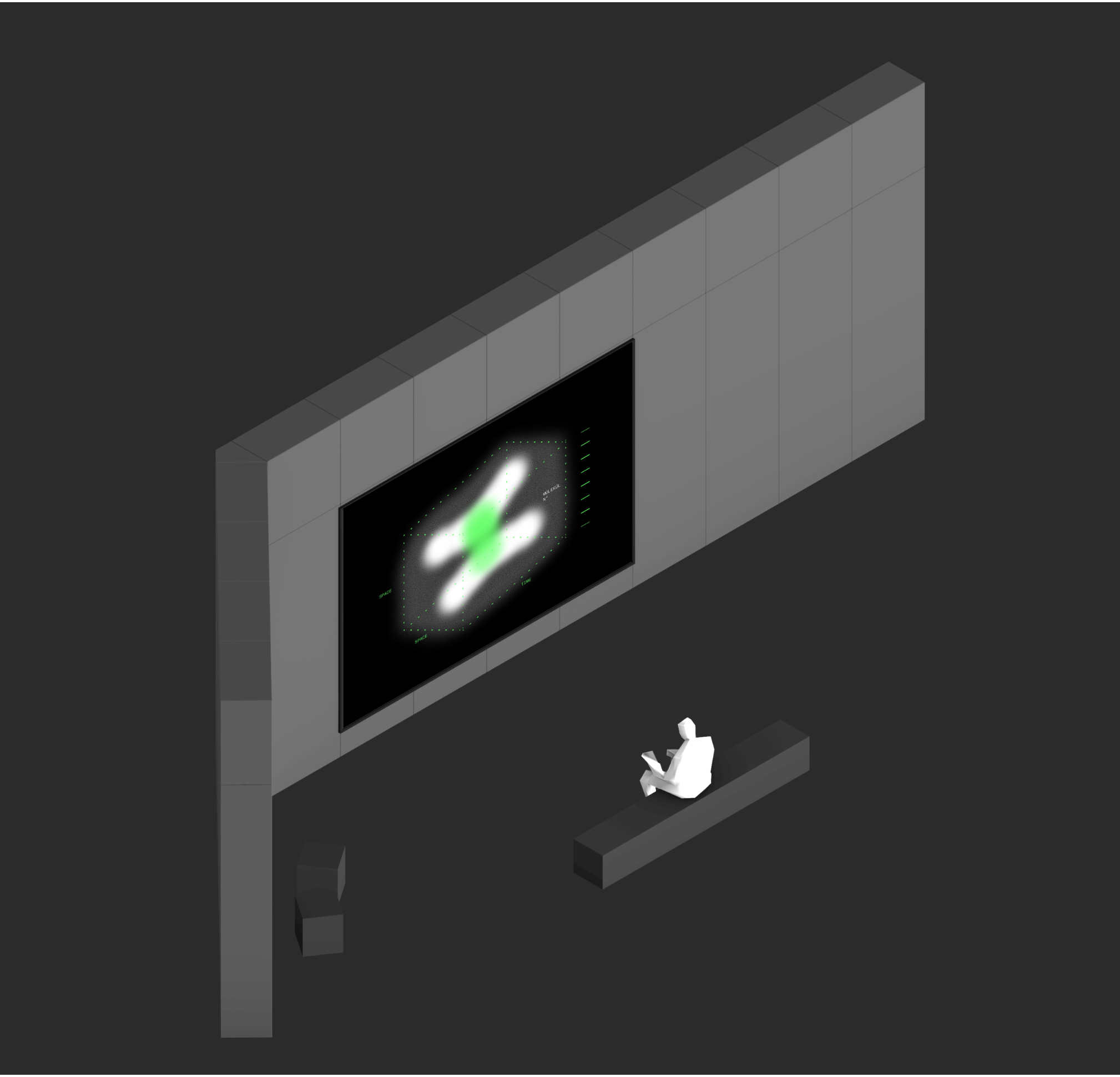
Station 3 – Proportions / Quantum Fields – requires no interaction. A large projection surface with seating invites visitors to linger. In two modes, it first visualises the distribution of matter in the universe, then the structure of matter itself: quantum fields rendered in an abstracted, grid-like visual language, scientifically precise and visually accessible.